
Finding the right Packing Machine can significantly impact your business operations. Each industry has unique requirements. The right packing machine must align with your specific needs.
Investing in a packing machine enhances efficiency and reduces labor costs. Different types of machines provide various functionalities. For instance, some pack items in pouches, while others handle bulk products. Understanding these differences is crucial.
Choosing a packing machine isn't always straightforward. It involves considering factors like speed, size, and adaptability. Mistakes can lead to wasted resources and time. Reflecting on your business goals can help clarify your choices. Making an informed decision may require trial and error.
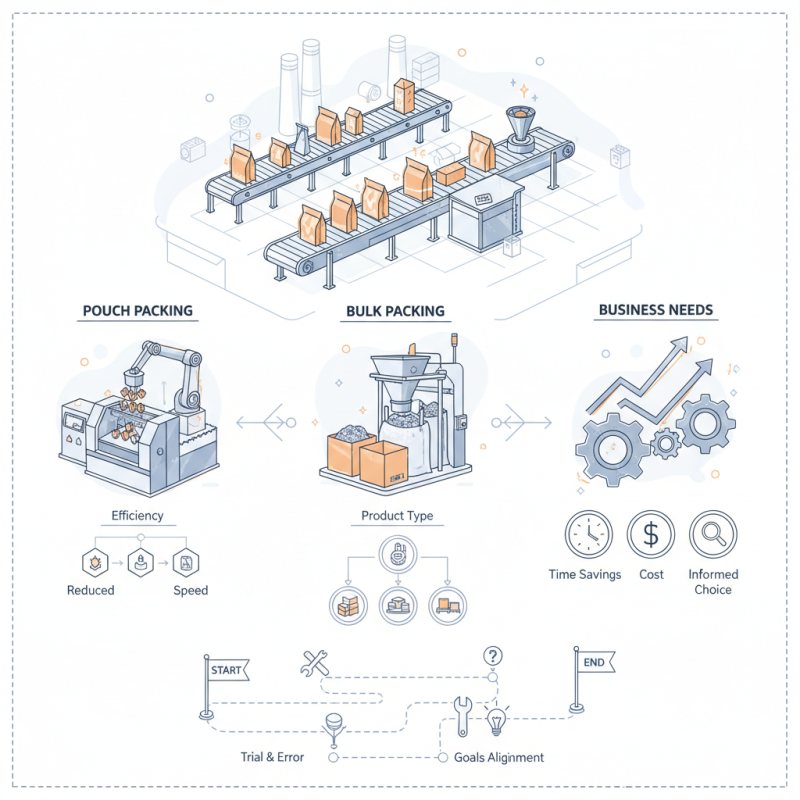
Packing machines are essential for businesses aiming to enhance efficiency. They come in various types, each tailored for specific needs. A packaging machinery report from MarketsandMarkets states that the global packaging machinery market is expected to reach $50 billion by 2025. This growth reflects the rising demand for automated solutions in numerous industries.
One significant type of packing machine is the flow wrapper. It provides high-speed packaging for items like snacks and other food products. Typically, a flow wrapper can package up to 200 units per minute. Another option is the case erector, which creates boxes for products. This machine addresses the challenge of slow manual packing processes. Data shows that companies using automation experience a productivity increase of around 20%.
However, the right choice isn't always clear. Some businesses might invest in advanced technology, only to find it doesn't match their volume needs. It's crucial to evaluate operation scale and product type before making a decision. Automation might save time, but training staff can pose challenges. Proper assessment is key to successful packing operations.
Choosing the right packing machine can be a daunting task. There are several key factors to consider. First, assess the type of products you will pack. Different machines are designed for various shapes and sizes. For instance, fragile items need padding. Bulk products require stability. It’s essential to match the machine's specifications to your product requirements.
Speed and efficiency are also crucial. A slow packing process can hinder productivity. Evaluate your production rate and choose a machine that meets your timeline. However, too much speed can lead to errors. Balancing speed with accuracy is essential. Another factor is maintenance. Some machines need frequent servicing, which can disrupt operations. It's important to find a reliable machine that won’t take too much time to maintain.
Don’t overlook the ease of use. A complex machine can confuse staff. Proper training is needed, which may incur additional costs. Consider how user-friendly the controls are. Lastly, factor in your budget. Investing in a high-quality machine may save costs in the long run, but initial expense can be daunting. Reflect on your specific business needs and weigh all factors carefully.
When assessing your business's packing requirements, consider the product type. Different items have unique packaging needs. For instance, fragile items require protective materials. On the other hand, bulkier products might need sturdy containers. Evaluate how these factors influence your choices.
Next, think about the volume of your output. If you have a high production rate, automation could save time. Manual packing is tedious and prone to errors. Yet, not all businesses are ready for automation. Some may find it overwhelming or unnecessary. Balance your growth with manageable solutions.
Lastly, consider your budget. High-quality machines and materials can be expensive. It’s essential to find a balance between cost and quality. Cheap options might lead to more issues in the long run. Reflect on your actual needs to avoid overspending. Sometimes, the simplest solution can yield the best results.
When it comes to packing machines, choosing the right brand can make a big difference. The market offers a variety of options tailored to different business needs. Some brands excel in speed while others focus on versatility. Understand the unique requirements of your business to guide your decision.
One vital tip is to assess your production volume. Brands vary in capabilities. Some packing machines handle light-duty tasks. Others are built for heavy usage. Investing in the right machine prevents future headaches. Remember, easier operation is essential for efficiency.
Another critical consideration is maintenance requirements. Some machines require regular upkeep, while others come with minimal maintenance needs. The more you know about what you're investing in, the better your productivity will be. Researching maintenance schedules and availability of parts is a must. This helps avoid downtime issues later on.
Investing in a packing machine is a pivotal decision for any business. The costs can vary widely, making careful consideration essential. Establishing a budget is the first step. Factor in initial costs, maintenance, and training expenses for staff. Unexpected costs often arise, so it’s wise to prepare for them.
Tips: Always include an emergency fund for repairs. Machines can break unexpectedly.
When evaluating options, consider the volume of products you handle. A machine suited for small batches may not meet the needs of larger operations. Think about your growth projections over the next few years. There’s a balance between cost and efficiency. Cheaper machines may save money upfront but might lack durability.
Tips: Analyze usage patterns, and monitor the performance regularly. It helps to recognize any emerging issues.
Moreover, think about the technology involved. Modern machines feature automation and smart tech. Better technology can enhance productivity but may come at a higher cost. It’s about finding the right fit for your specific business needs. Sometimes, the most advanced machine might not deliver the returns you expect. Hence, thorough research is necessary.