
What Are Boat Trailer Leaf Springs?
Boat trailer leaf springs are curved steel strips that support a trailer’s load and help absorb bumps from the road. You may spot them beneath the axle: layered metal leaves held together with a center bolt and clamps. Their simple shape can hide a demanding job. They must carry the boat, trailer, fuel, and gear while coping with vibration, water, and changing loads.
A useful shop-floor perspective comes from Daniel Mercer, a fictional composite marine-trailer specialist created for this introduction: “A spring that looks close is not always the right spring; match its capacity, dimensions, and mounting points.” This is a practical reminder, not a verified quotation from a real technician. Matching matters. Spring length, width, eye style, load rating, and axle arrangement can all affect fit and performance. A mismatch may leave the trailer sitting unevenly or place extra strain on its suspension.
This guide explains what boat trailer leaf springs do, how common designs differ, and what to inspect before replacement. Look for cracked leaves, heavy rust, shifted clamps, or a trailer that leans when parked on level ground. Small clues count. Still, a visual check cannot confirm every hidden fault, and spring selection depends on the trailer’s specifications—not guesswork alone. Real trailers can be messy. Saltwater exposure, uneven loading, and past repairs may complicate an otherwise straightforward diagnosis. When details are uncertain, verify the measurements and ratings against reliable manufacturer information.
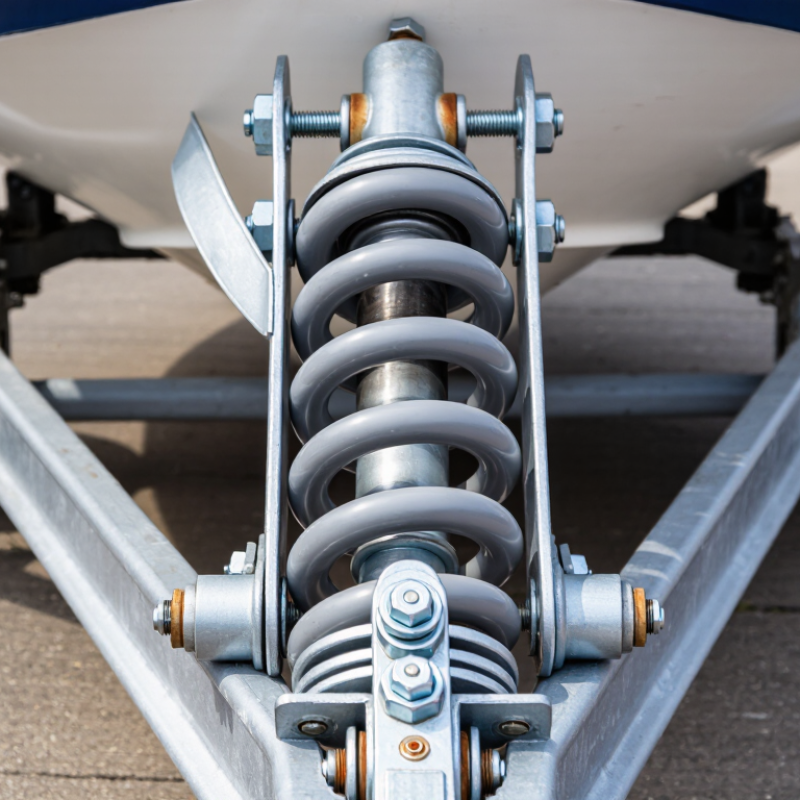
What Boat Trailer Leaf Springs Are and What They Do
Boat trailer leaf springs are curved steel strips stacked in layers beneath the trailer frame. They connect the frame to the axle and flex as the wheels cross bumps, potholes, or a rough boat ramp. The spring’s movement helps support the load and soften sharp jolts before they reach the boat and trailer structure. That matters.
The number and thickness of the leaves affect how much weight a spring can support. The correct setup depends on the trailer’s design and its loaded weight, not just the boat’s advertised weight. Leaf springs also help keep the axle positioned under the frame. They do not fix poor loading or worn tires. Salt spray and standing water can speed corrosion, while a cracked leaf, sagging spring, or uneven trailer height may signal trouble. Rust alone is not always proof of failure, but deep pitting deserves attention. I’d avoid guessing from appearance alone.
Tips: Rinse springs with fresh water after saltwater use, then let them dry. Look for cracks, shifted leaves, loose fasteners, and uneven tire wear. If a spring is cracked or the trailer sits unevenly, have it checked before towing. Never crawl beneath a trailer supported only by a jack.
What Are Boat Trailer Leaf Springs? - What Boat Trailer Leaf Springs Are and What They Do
| Topic | What It Is | What It Does on a Boat Trailer | Practical Detail |
|---|---|---|---|
| Leaf spring | A flexible suspension spring made from one or more curved strips of spring steel, called leaves. | Supports the trailer’s load and flexes as the wheels travel over bumps and uneven surfaces. | Spring capacity and fit must be matched to the trailer’s axle, mounting points, and intended load. |
| Main leaf | The longest leaf, usually formed with an eye at each end on an eye-type spring. | Connects the spring to the trailer frame through hangers, bolts, or shackles and carries much of the spring’s load. | Cracks, severe corrosion, or a distorted shape can indicate that the spring needs inspection or replacement. |
| Additional leaves | Shorter steel strips stacked beneath the main leaf in a multi-leaf spring. | Work together with the main leaf to provide support and control spring deflection. | Not every trailer uses the same number or arrangement of leaves; the spring assembly should be selected by its specifications. |
| Spring eyes and bushings | The curled ends of an eye-type spring and the sleeves fitted inside them. | Allow the spring to pivot at its frame connections as the suspension moves. | Worn bushings or loose, damaged hardware can cause excess movement, noise, or uneven wear. |
| Slipper spring | A leaf spring with an end designed to slide against a hanger rather than attach through a second eye. | Provides a moving frame connection as the spring flexes. | Its shape and hanger arrangement differ from an eye-to-eye spring, so the two styles are not automatically interchangeable. |
| Tandem-axle equalizer | A pivoting linkage used on many trailers with two axles and leaf-spring suspension. | Helps share suspension movement between the axles when one wheel encounters an uneven surface. | Not all tandem-axle trailers use the same equalizer or suspension layout. |
| Ride and load support | The combined effect of the springs, axle, tires, and suspension hardware. | Helps support the boat and trailer while reducing the impact of road movement on the trailer structure and cargo. | Leaf springs do not increase the rated capacity of the trailer, axle, tires, or hitch. |
| Inspection signs | Visible condition and movement of the spring assembly and its connections. | Regular checks help identify damage before it affects safe towing. | Look for cracked or broken leaves, heavy rust, loose fasteners, worn bushings, and unequal trailer height. Follow the trailer maker’s maintenance guidance. |
| Marine-use care | Maintenance suited to a trailer exposed to water, road spray, and changing weather. | Helps limit corrosion and keeps suspension parts in serviceable condition. | Rinse away salt or debris where appropriate, inspect for corrosion, and replace damaged parts with correctly specified components. |
Note: Trailer suspension designs and load ratings vary. Check the trailer and component specifications before selecting or servicing leaf springs.
Related Posts
-

2025 Top Trailer Kit Reviews Features and Buying Guide
-
How to Choose the Right Trailer Tongue for Optimal Load Distribution and Stability
-

7 Essential Reasons You Need a Cargo Trailer for Your Next Adventure
-
What is the Best Small Boat Trailer for Your Needs and How to Choose One
-
What to Know About Trailer Tongue for Your Next Purchase?
-
What is the Best Type of Boat Trailer Tires for Your Needs?