
0
  • WHY CHOOSE LOADRITE?
  • Register a Trailer
  • Dealer Portal
  • Contact
  • Trailers
  • Parts
    • Axle Assemblies & Parts
    • Lights & Electrical
    • Hull Support Systems
    • Spare Tire Carriers
    • Braking
    • Springs, Supports & Bushings
    • Couplers & Tongue Jacks
    • Trailer Accessories
    • Fender Components
    • Wheel Assemblies & Components
    • Frame Components
    • Winch Stand Parts
    • Hardware
  • Trailers 101
  • Resources
    • FAQs
    • Trailer Parts Store
    • Service Videos
    • Documents
    • Warranty Information
  • About
    • Why Choose Load Rite?
    • News
    • Become a Dealer
  • Blog

Boat Trailers

  • Boat Trailers
  • Bunk Models
  • Roller Models
  • Skiff/Jon Boat Trailers
  • Catamaran Trailers
  • Canoe/Kayak Trailers
  • Ski Boat & Inboard Trailers

Personal Watercraft
(PWC)

  • Personal Watercraft Trailers

Pontoon Trailers and Tritoon Trailers

  • Pontoon Trailers
  • Tritoon Trailers

Specialty & Custom

  • Utility Trailers
  • Custom Trailers
  • Sailboat Trailers
  • Australian Certified Trailers
  • Shipping & Storage Cradles
 |
How to Choose an Intelligent Vehicle Inspection System 2026

How to Choose an Intelligent Vehicle Inspection System 2026

Choosing an Intelligent Vehicle Inspection System in 2026 means looking beyond a polished dashboard. The right system should help technicians find faults accurately, record evidence clearly, and move vehicles through inspection without needless delays. A useful principle, paraphrasing automotive technology author James E. Duffy’s diagnostic teaching, is: “A scan result is a clue, not a diagnosis.” That distinction matters when a warning light appears, but the underlying fault is unclear.

Start with the vehicles you actually service. Check whether the system supports their makes, models, and diagnostic protocols. Then examine its cameras, sensors, lighting, and measurement tools. A camera that misses a cracked windshield in dim workshop light is not much help. Neither is software that produces alerts without showing the evidence behind them. Ask vendors to demonstrate the system on representative vehicles, not only on a prepared showroom model.

Look closely at integration, training, data handling, and ongoing support. Confirm that inspection records can connect with your existing workflow and remain easy to review. Ask how software updates are delivered and what happens when the network drops. Small details count. So does technician feedback. A system may perform well in a presentation yet frustrate staff during a busy shift. One limitation is worth admitting: no automated inspection replaces sound judgment. Use this guide to compare capabilities, verify claims, and choose a system that fits your operation—not just the trendiest feature list.
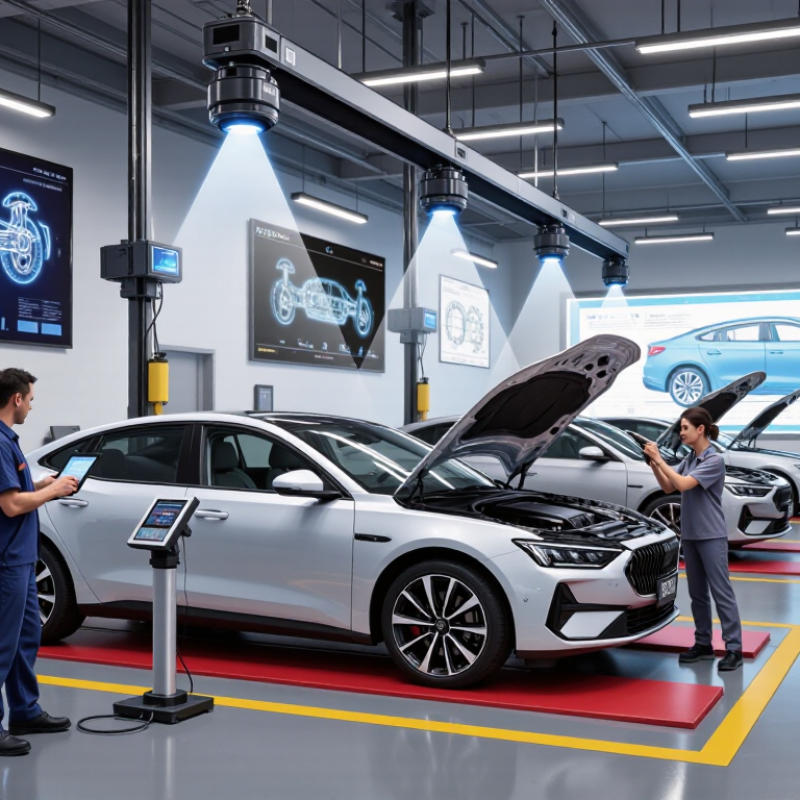
How to Choose an Intelligent Vehicle Inspection System 2026
Table of Contents [Hide]
1 Define the Inspection Goals and Vehicle Types
2 Assess Site Conditions and Operational Requirements
3 Compare Sensors, AI Features, and Data Integration
4 Verify Accuracy, Compliance, and Data Security
5 Evaluate Costs, Deployment, and Long-Term Support

Define the Inspection Goals and Vehicle Types

An intelligent vehicle inspection system should begin with a clear question: what must it detect, record, or verify?

A depot may prioritize tire wear, underbody damage, and repeatable fleet checks. A repair center may need close images of body panels and wheel alignment. Define the required evidence before selecting cameras or sensors. Keep the criteria measurable. A clean image is not always a useful inspection.

Next, identify the vehicles that will pass through the system. Record body style, dimensions, ground clearance, typical load, and powertrain. The European Automobile Manufacturers’ Association reported that EU passenger cars averaged 12.3 years old in 2022 in its Vehicles on European Roads 2024 report. Older vehicles can bring varied wear and inconsistent condition. Meanwhile, the International Energy Agency reported nearly 14 million electric cars sold worldwide in 2023, about 18% of new car sales. That shift makes battery-related checks and safe visual access relevant planning questions. No checklist catches everything. Leave room for unusual configurations, and test with vehicles from the actual fleet; a tidy pilot group can hide gaps.

Assess Site Conditions and Operational Requirements

A reliable vehicle inspection setup begins with the site, not the camera. Walk the lanes at dawn, midday, and after rain. Note glare, shadows, standing water, road slope, overhead clearance, and where vehicles brake or queue. Measure lane width and vehicle speed at the proposed capture point. The Federal Highway Administration’s 2022 Traffic Monitoring Guide emphasizes choosing representative collection locations and documenting site conditions. A perfect test lane may not reflect daily traffic.

Check the actual vehicle mix and inspection workload. Record peak vehicles per hour, expected wait times, operating hours, and the proportion of trucks, buses, and low-clearance vehicles. Confirm stable power, network coverage, safe maintenance access, and a clear process for handling unreadable images. Small details matter. A pole that vibrates in wind can undermine otherwise sound results.

Set acceptance targets before procurement: capture rate, review time, uptime, and acceptable false alerts. McKinsey’s 2017 predictive-maintenance analysis estimated that such approaches could reduce machine downtime by 30–50 percent. That is an industry-wide benchmark, not a promise for inspection systems. Test under real site conditions before relying on it. One awkward truth: teams often underestimate nighttime glare and seasonal changes. Recheck those assumptions during a pilot.

Compare Sensors, AI Features, and Data Integration

An intelligent vehicle inspection system should be judged by what it can detect, not by the number of sensors listed on its brochure. Cameras capture scratches, dents, and paint defects; depth sensors help measure panel gaps and body alignment. Thermal sensors may reveal heat-related anomalies, but they add cost and need a clear use case. Test the system under workshop lighting, with wet surfaces and different vehicle colors. Glare can still fool a camera.

AI features matter only when their results are consistent and reviewable. McKinsey’s 2024 Global Survey on AI reported that 72% of respondents’ organizations used AI in at least one business function. That broad adoption figure is not a measure of inspection accuracy. Ask vendors for defect-level validation results, false-reject rates, and examples of how technicians can correct mislabels. Data integration deserves equal scrutiny: inspection records should connect cleanly with repair orders and vehicle histories. IBM’s 2024 Cost of a Data Breach Report put the global average breach cost at USD 4.88 million across surveyed organizations, a useful reminder to assess access controls and data retention. It is not an automotive-specific estimate.

Tips: Run a small pilot on the same vehicles with both automated and technician inspections. Compare missed defects, repeat scans, and time per vehicle. Check whether data exports retain timestamps and image links. Small details matter. A system that scores well in a demo may still struggle on a busy, dimly lit service floor.

Verify Accuracy, Compliance, and Data Security

When choosing an intelligent vehicle inspection system in 2026, look beyond speed and polished demonstrations. Accuracy should be measured against verified reference inspections, not vendor claims alone. Test vehicles with different shapes, colors, damage types, and lighting conditions. A scratch that disappears in bright sunlight may be missed in a dim service bay. Small errors matter. Ask how the system reports false positives and missed defects, and whether staff can review images and correct classifications.

Compliance depends on where and how the system is used. Check whether its inspection records, retention settings, and reporting tools support your organization’s applicable requirements. Request clear documentation on data handling, access controls, and audit trails. Requirements can change, so confirm details with qualified compliance staff rather than relying on a sales presentation. A polished dashboard is not proof of compliance.

Data security deserves the same scrutiny as detection accuracy. Ask whether images are encrypted during transfer and storage, who can access them, and how permissions are changed when staff roles change. Review retention and deletion options, backup practices, and incident-response procedures. No system is perfect. A pilot may still miss rare vehicle conditions, so keep reviewing edge cases after deployment.

How to read this chart: Compare checklist coverage across the three areas when evaluating an intelligent vehicle inspection system. These illustrative sample values are not measured market data; replace them with results from your own documented system tests and audits.

Evaluate Costs, Deployment, and Long-Term Support

How to Choose an Intelligent Vehicle Inspection System 2026

Evaluate the full cost, not just the equipment quote. A system may also require cameras, lighting, network upgrades, installation, staff training, and ongoing software fees. Ask for a three-year cost estimate with maintenance and replacement parts listed separately. During a site visit, check whether the inspection area has enough space and consistent lighting. Small layout problems can slow vehicles and create unreliable images. They matter.

Tips: Run a short pilot during normal operating hours. Track inspection time, missed defects, and staff adjustments. Ask who handles updates, and how quickly support responds when a camera or sensor fails.

Deployment should fit your current workflow, not force a rushed overhaul. Confirm which vehicle types and inspection tasks the system can handle, then test it with real traffic conditions. Request clear service terms, including response times, training refreshers, data access, and the expected life of key components. Long-term support is easy to overlook when a demo works smoothly. I would also ask for a named escalation path, even if the vendor cannot promise every repair will be immediate. No system is maintenance-free. Leave room in the budget for calibration and unexpected downtime.

How to Choose an Intelligent Vehicle Inspection System 2026 — Evaluate Costs, Deployment, and Long-Term Support

Compare common deployment models against practical purchasing criteria. Cost and schedule figures below are indicative planning ranges in USD, not supplier quotations.

Evaluation Dimension Portable or Assisted Setup Fixed Single-Lane System Multi-Lane Automated Facility What to Verify Before Buying
Typical configuration Mobile inspection equipment, cameras, diagnostic tools, and guided software for an operator-led process. Fixed cameras and sensors at one inspection lane, with automated image capture, checks, and reporting. Several connected lanes with centralized workflow, automated identification, and shared reporting. Confirm which inspections are automated and which still require staff judgment or manual measurement.
Indicative initial system cost $15,000–$45,000 $60,000–$200,000 $250,000–$800,000+ Request a line-item quote covering equipment, software, installation, training, and optional modules.
Potential additional site costs Usually limited, but may include connectivity, secure storage, and vehicle access improvements. May include electrical work, lane preparation, network upgrades, and equipment mounting. May include civil works, multiple-lane construction, traffic management, and a dedicated server or network environment. Ask whether taxes, building work, network changes, and commissioning are included or excluded.
Indicative deployment time Approximately 2–6 weeks for configuration, training, and initial validation. Approximately 6–16 weeks, depending on site readiness and integration requirements. Approximately 3–9 months or longer for multi-lane construction, integration, and acceptance testing. Get a written project plan with site survey, delivery, installation, calibration, testing, and go-live milestones.
Throughput planning Best suited to lower or variable volumes; actual capacity depends heavily on operator workflow. Supports a repeatable single-lane process; measure completed inspections per hour during a live pilot. Designed to process higher volumes across lanes; total capacity depends on vehicle mix and exception handling. Use your own peak-hour arrival patterns and inspection mix rather than relying on headline throughput claims.
Staffing and workflow Typically retains more manual steps and operator involvement. Can reduce repetitive capture and data entry while keeping staff available for exceptions. Can standardize workflows across lanes, but requires operational oversight and escalation procedures. Clarify roles for review, reinspection, overrides, and handling of unclear or incomplete results.
Integration requirements May work as a stand-alone setup or export reports and inspection records. Commonly connects to inspection, scheduling, identity, or maintenance systems through defined interfaces. Often needs coordinated integration across lane controls, databases, reporting, and site operations. Confirm supported APIs, data formats, ownership of records, access controls, and integration fees.
Annual support and upkeep Budget for software support, device upkeep, calibration, and replacement of wear items. Budget for software updates, remote support, sensor checks, and periodic calibration. Budget for support coverage across lanes, critical spare parts, system monitoring, and planned maintenance. Ask for separate annual prices for software, hardware service, calibration, spare parts, and on-site response.
AI and measurement validation Results may rely on operator-captured images and software assistance. Test detection performance across lighting, vehicle types, dirt, and common inspection exceptions. Validate consistency between lanes, software versions, and operating conditions. Request documented acceptance criteria, test procedures, limitations, and a process for reviewing disputed results.
Long-term support questions Check device replacement availability, software compatibility, and export options. Check calibration services, software update policy, response times, and parts availability. Check service-level commitments, lifecycle support, disaster recovery, and expansion options. Include support duration, response targets, cybersecurity updates, training refreshers, and end-of-life notice in the contract.
Best-fit use case Small sites, pilots, mobile operations, or locations with changing inspection needs. Sites that need a consistent inspection process without the complexity of multiple lanes. High-volume operations with suitable site infrastructure and a clear business case for automation. Choose the smallest deployment that meets verified capacity, compliance, and service requirements.

Planning note: Costs, installation times, and throughput vary by inspection scope, site readiness, local labor rates, integration complexity, and service coverage. Obtain comparable written quotations and validate performance with a representative pilot before committing.

Article Source:

  • Vehicle Hail Scanning Systems
  • Ai Vehicle Scanning Systems
  • Trailers
  • Parts
  • About
  • Contact
  • Find a Dealer
1-800-LOADRTE
©2017 - 2025 Load Rite Trailers, Inc
  • Terms & Conditions
  • Privacy
  • Site Map