0
  • WHY CHOOSE LOADRITE?
  • Register a Trailer
  • Dealer Portal
  • Contact
  • Trailers
  • Parts
    • Axle Assemblies & Parts
    • Lights & Electrical
    • Hull Support Systems
    • Spare Tire Carriers
    • Braking
    • Springs, Supports & Bushings
    • Couplers & Tongue Jacks
    • Trailer Accessories
    • Fender Components
    • Wheel Assemblies & Components
    • Frame Components
    • Winch Stand Parts
    • Hardware
  • Trailers 101
  • Resources
    • FAQs
    • Trailer Parts Store
    • Service Videos
    • Documents
    • Warranty Information
  • About
    • Why Choose Load Rite?
    • News
    • Become a Dealer
  • Blog

Boat Trailers

  • Boat Trailers
  • Bunk Models
  • Roller Models
  • Skiff/Jon Boat Trailers
  • Catamaran Trailers
  • Canoe/Kayak Trailers
  • Ski Boat & Inboard Trailers

Personal Watercraft
(PWC)

  • Personal Watercraft Trailers

Pontoon Trailers and Tritoon Trailers

  • Pontoon Trailers
  • Tritoon Trailers

Specialty & Custom

  • Utility Trailers
  • Custom Trailers
  • Sailboat Trailers
  • Australian Certified Trailers
  • Shipping & Storage Cradles
 |
How to Choose a Jon Boat Trailer in 2026?

How to Choose a Jon Boat Trailer in 2026?

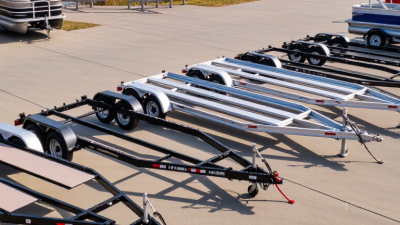
Choosing a jon boat trailer in 2026 means matching the trailer to your boat, motor, and launch routine—not just its advertised capacity. Start with the boat’s loaded weight, including fuel, battery, anchor, and fishing gear. Check the manufacturer’s capacity label and leave a sensible margin. A trailer that looks sturdy can still sit too low, flex under load, or make the boat difficult to retrieve. Small details matter. Measure hull length and width, then compare them with bunk spacing, support points, and fender clearance. If unsure, ask a qualified dealer or trailer builder to verify the fit against the boat maker’s specifications.

Think about where and how often you launch. Compare frame materials, corrosion protection, and maintenance needs for your local conditions. Rollers can ease launching on some ramps, while bunks often provide steady support during transport. Neither setup is automatically best. Check tire ratings, bearing protection, lights, winch position, tongue length, and spare-tire access before purchase. If possible, test the towing setup on a familiar route and watch for sway, scraping, or blocked visibility. A spec sheet cannot predict every narrow ramp or uneven driveway. Use this guide to compare trailer types, fit, materials, maintenance, and budget before deciding. A careful match can make loading calmer and help protect the hull over many trips.
How to Choose a Jon Boat Trailer in 2026?
Table of Contents [Hide]
1 Define Your Jon Boat’s Size, Weight, and Intended Use
2 Match Trailer Capacity and Dimensions to Your Boat
3 Compare Trailer Materials, Axles, and Support Systems
4 Check Towing Compatibility, Brakes, and Local Requirements
5 Inspect Build Quality, Maintenance Needs, and Total Cost

Define Your Jon Boat’s Size, Weight, and Intended Use

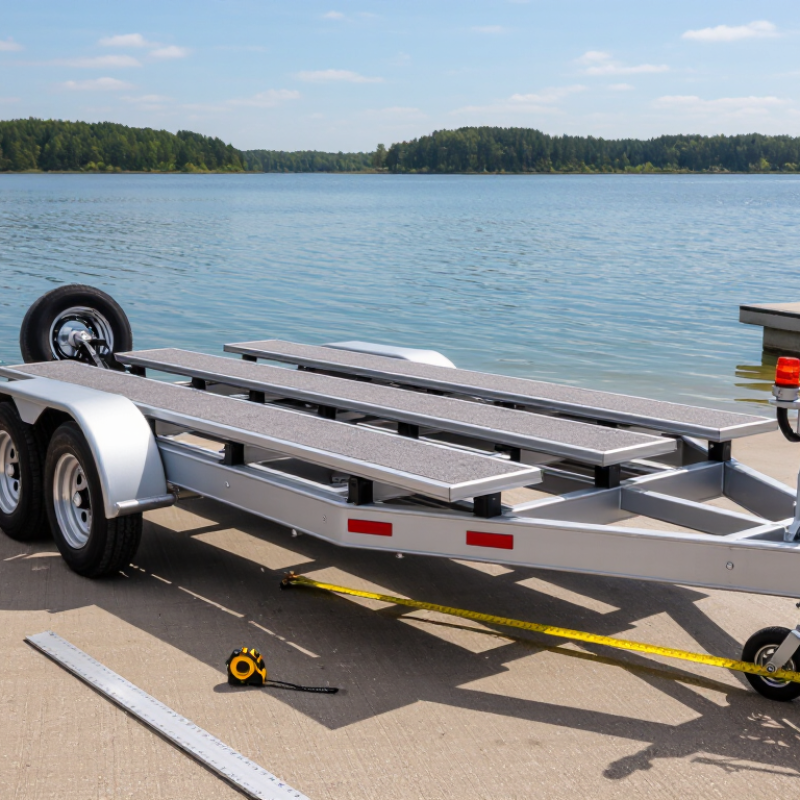
Start with the hull. Measure its overall length and width, including any motor or bow fitting that affects how it sits on the trailer. Check the boat maker’s specifications, then compare them with the trailer’s bunk or roller layout. A flat-bottomed Jon boat needs steady support along the hull, not just a close match in length. Measure it yourself; catalog dimensions can leave out small but important details.

Weight matters just as much. Add the boat, outboard, fuel, battery, anchor, and the gear you actually carry. A bare-hull figure can be misleading. Check the trailer’s rated capacity and the towing vehicle’s limits, and leave room for equipment you may add later. If the loaded weight is uncertain, a scale gives a better answer than a guess. Real water is messy.

Think about where and how often you launch. A light trailer may suit short trips on paved roads, while frequent use on rough access roads calls for sturdier construction and secure tie-down points. Consider ramp steepness, storage space, and whether you load alone. A paper estimate is only a starting point; the right fit can still need small adjustments once the boat rests on the bunks. I would recheck the fit before a long drive.

Match Trailer Capacity and Dimensions to Your Boat

A Jon boat trailer should fit the boat’s actual loaded weight, not just the number printed in a sales listing. Add the hull, outboard, fuel, battery, anchor, and regular gear. Then compare that total with the trailer’s rated carrying capacity, allowing a sensible margin rather than operating at its limit. Check whether the rating refers to cargo capacity or the trailer’s gross weight; those figures are not interchangeable. When in doubt, confirm the definitions in the trailer specifications.

Measure the boat’s overall length and beam, including anything that extends beyond the hull. The trailer should support the hull along its intended contact points, with bunks or rollers positioned to avoid pressure on thin aluminum panels. The transom needs proper support, too. Small gaps matter. A trailer that is technically long enough may still place the winch post poorly or leave the boat sitting unevenly. Adjustability helps, but it cannot fix a fundamentally mismatched frame.

Before choosing, compare the trailer’s usable width and bunk spacing with the boat’s bottom shape. A flat-bottomed Jon boat and a mod-V hull may need different support arrangements. Check that the loaded boat can sit level and that the bow eye reaches the winch without forcing the hull forward. One detail is easy to miss: accessories and fishing gear change the towing weight. Recheck the setup after loading, and follow the boat and trailer manufacturers’ specifications. I’d rather measure twice than trust a rough estimate.

Compare Trailer Materials, Axles, and Support Systems

A jon boat trailer’s frame material affects weight, upkeep, and corrosion resistance. Galvanized steel is sturdy, but chipped coatings can expose metal to moisture. Aluminum is lighter and will not rust like steel, though welds and hardware still deserve regular inspection. Salt leaves clues. Rinse the frame after use in brackish or salt water, then check around joints and fasteners. It is easy to overvalue a shiny frame; fit and upkeep matter more.

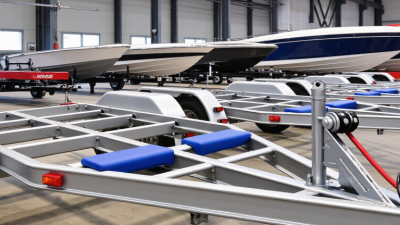
Choose axle and tire ratings for the fully loaded rig, not just the boat’s listed weight. Include the motor, fuel, battery, safety gear, and trailer itself, then verify the combined capacity against the trailer’s specifications. A single axle may keep a light setup simple. Heavier loads can call for a different configuration, but extra wheels also add maintenance. Check the recommended tongue load, too. Support systems need equal attention: properly placed bunks spread contact along the hull, while rollers can ease launching but may concentrate pressure. Keep supports under the boat’s stronger longitudinal sections, following its maker’s guidance. Set the winch post to meet the bow securely, and use transom straps that hold the stern without crushing it. After loading, look for uneven bunk contact. Small adjustments are easy to postpone. They shouldn’t be.

Check Towing Compatibility, Brakes, and Local Requirements

A jon boat trailer must match the fully loaded boat, not its dry brochure weight. Add the hull, outboard, fuel, battery, anchor, and wet gear. Then compare that total with the tow vehicle’s rated towing capacity and payload. Hitch load counts against payload, too. Check the vehicle manual and trailer plate; neither should be treated as an estimate. SAE International’s J2807 standard uses defined performance tests to establish tow ratings, so engine size alone is a poor guide.

Brakes deserve a separate check. Their required type and weight threshold vary by location, and some rules also specify breakaway systems or inspection requirements. Verify the current rules with your state or provincial transport authority before buying. The U.S. Coast Guard’s 2023 Recreational Boating Statistics report recorded 564 recreational boating deaths; that figure is not trailer-specific, but it reinforces why safe preparation matters. A short test tow on a quiet road can reveal sway, poor braking, or a hitch that sits too high. Small details matter.

I still recheck tire pressure after loading; it is easy to overlook. Confirm the trailer tires’ load rating, wheel-bearing condition, lights, and safety chains. Keep the boat level, and follow the hitch and trailer makers’ guidance for tongue load. A trailer that fits the boat may still exceed the vehicle’s limits. Both need to work together.

Inspect Build Quality, Maintenance Needs, and Total Cost

A Jon boat trailer should fit the boat’s actual loaded weight, not just its empty hull. Include the motor, fuel, battery, and gear when checking capacity. Measure the hull and compare its support points with the trailer’s bunks or rollers. A mismatch can make loading awkward and leave the boat poorly supported.

Inspect the frame underneath, where chipped paint and trapped mud can conceal rust. Check welds, the tongue, and the axle for cracks, bends, or loose hardware. Look underneath. Spin each wheel and listen for grinding; also inspect tires for weather cracks and uneven wear. Test the winch strap, safety chains, and lights. These small details matter, even when the trailer looks clean from a few feet away.

Maintenance affects the real purchase cost. Ask when the wheel bearings were last serviced, and budget for tires, lights, and replacement hardware if their condition is uncertain. If the trailer has brakes, check their operation and service history. Compare the asking price with likely repairs, towing accessories, and any applicable fees. Small parts add up. I would not treat a fresh coat of paint as proof of good care; it may simply make inspection harder. A careful look can still miss hidden wear, so leave room in the budget for surprises.

Related Posts

  • Top 10 Jon Boat Trailer Types Buyers Should Know?

    Top 10 Jon Boat Trailer Types Buyers Should Know?

  • 2026 Top Jon Boat Trailer Buying Guide for Global Shoppers?

    2026 Top Jon Boat Trailer Buying Guide for Global Shoppers?

  • China Top Boat Trailer Manufacturers for Global Buyers?

    China Top Boat Trailer Manufacturers for Global Buyers?

  • China Top Boat Trailer Manufacturers How to Choose?

    China Top Boat Trailer Manufacturers How to Choose?

  • What is a Boat Trailer Leaf Spring and How Does It Work?

    What is a Boat Trailer Leaf Spring and How Does It Work?

  • How to Choose the Right Pontoon Boat Trailer for Your Needs

    How to Choose the Right Pontoon Boat Trailer for Your Needs

Blog Tags:

  • jon boat trailer manufacturer
  • jon boat trailer supplier
  • aluminum jon boat trailer
  • boat trailer manufacturer
  • boat trailer wholesale
  • custom boat trailer
  • Trailers
  • Parts
  • About
  • Contact
  • Find a Dealer
1-800-LOADRTE
©2017 - 2025 Load Rite Trailers, Inc
  • Terms & Conditions
  • Privacy
  • Site Map