
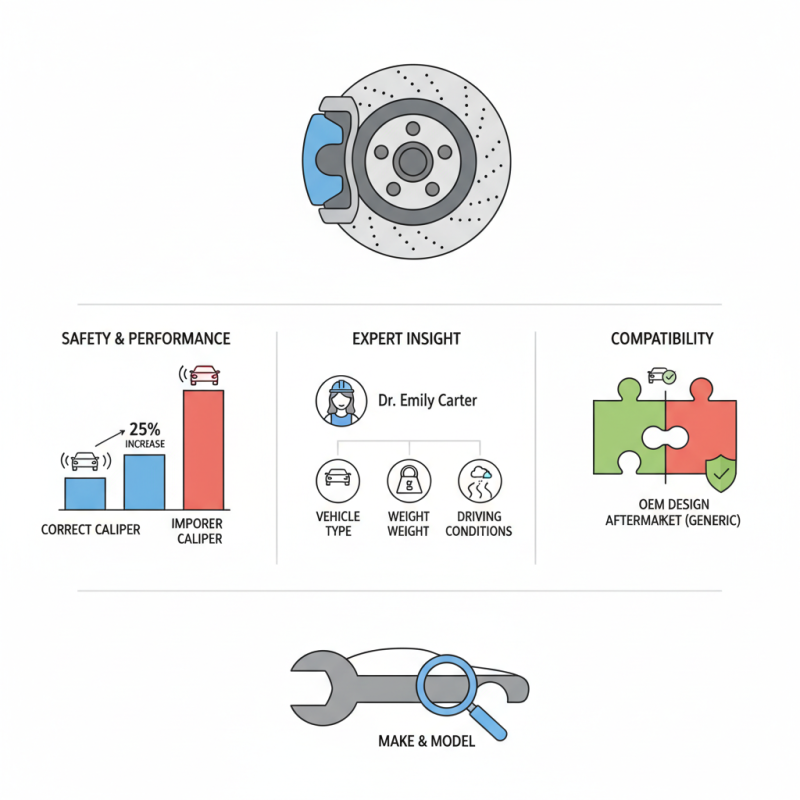
Choosing the right Disc Brake Caliper is crucial for vehicle safety and performance. According to the Automotive Brake System Report 2023, improper caliper selection can lead to a 25% increase in braking distance. Experts emphasize that selecting the appropriate caliper affects overall vehicle stability and driver confidence.
Senior Brake Systems Engineer, Dr. Emily Carter, states, “The right Disc Brake Caliper can make a significant difference in your vehicle's handling.” Her expertise highlights the importance of considering factors like vehicle type, weight, and driving conditions. Many drivers overlook these details, which can impact their braking efficiency.
There is no one-size-fits-all solution when it comes to Disc Brake Calipers. Each vehicle has unique specifications. Many aftermarket calipers may not provide the compatibility needed for optimal performance. This leads to questionable reliability and potential safety issues. Careful consideration of the caliper designed for your specific make and model is essential.
Disc brake calipers are crucial components in modern vehicles. They play a vital role in vehicle safety by providing the necessary force to clamp the brake pads against the rotor. This action generates the friction needed to slow down or stop the vehicle. Understanding how calipers work can help you make informed decisions when maintaining or upgrading your braking system.
Calipers come in two main types: floating and fixed. Floating calipers slide in and out, using a single piston to apply pressure evenly. Fixed calipers, on the other hand, have pistons on both sides of the rotor, offering more consistent braking performance. Both types have their pros and cons. Experience shows that the right choice depends on your driving habits and vehicle type. For instance, if you frequently drive in demanding conditions, a fixed caliper may be more beneficial.
Keep in mind that selecting the appropriate caliper is not just about performance; it’s also about compatibility with your vehicle. Even slight mismatches can lead to uneven wear or failure. It’s essential to reflect on your brake history and think about why specific options might have worked or failed in the past. Consider factors like material quality and piston design as these can impact durability and performance.
| Caliper Type | Material | Piston Count | Weight (lbs) | Recommended Use |
|---|---|---|---|---|
| Single Piston | Aluminum | 1 | 3.5 | Daily Driving |
| Dual Piston | Cast Iron | 2 | 4.5 | City Driving |
| Four Piston | Aluminum | 4 | 5.0 | Performance Driving |
| Six Piston | Aluminum | 6 | 6.0 | Racing |
When choosing a disc brake caliper, several key factors must be considered to ensure safety and performance. The type of vehicle plays a crucial role. For example, performance cars may require calipers with enhanced clamping force for better stopping power. Studies indicate that vehicles with high-performance requirements often see shorter stopping distances with better-quality calipers.
Additionally, the material of the caliper impacts durability and weight. Aluminum calipers are lighter and prone to corrosion, while cast iron offers better heat dissipation. According to data from automotive research, lightweight calipers can improve fuel efficiency by up to 3% in certain vehicle models. Ensure the caliper design aligns with the vehicle's braking system compatibility to avoid operational issues.
Another critical aspect is the piston count in the caliper. More pistons can provide increased clamping force, which is vital for larger brake rotors. However, increasing the piston count can make maintenance more complex. An evaluation by brake specialists suggests inspecting your current braking system may present insights on what upgrades or replacements are truly necessary. Keep in mind, performance should not solely drive the choice; reliability is equally essential for safety.
When choosing a disc brake caliper, understanding the difference between floating and fixed types is crucial. Floating calipers utilize a single piston design. This piston applies pressure to one side of the brake pad, allowing the caliper to float and adjust against the rotor. As a result, they are often lighter and provide decent braking performance for everyday vehicles. According to a study from the Society of Automotive Engineers, floating calipers can effectively manage heat, reducing brake fade during average driving conditions.
On the other hand, fixed calipers have pistons on both sides of the rotor. This design provides uniform pressure on both brake pads, leading to enhanced stopping power. A recent report from Brake Engineering noted that fixed calipers generally deliver better performance in high-speed or heavy-load situations. However, these calipers tend to be heavier and more complex. Some users mistakenly believe a heavier component necessarily means better performance, but this isn't always true.
Considering your driving habits is critical. If you frequently drive in high-performance situations, a fixed caliper might be your best choice. For daily commuting, a floating caliper could suffice and provide cost savings. Each setup has its trade-offs; understanding these will help you make a more informed choice.
Choosing the right disc brake caliper for your vehicle involves key material considerations. Aluminum and cast iron are two popular options, each with distinct characteristics. Aluminum calipers are lighter, which can enhance vehicle performance and fuel efficiency. According to industry reports, they can reduce unsprung weight up to 25%, benefiting handling and responsiveness.
On the other hand, cast iron calipers offer exceptional durability. Their heat dissipation properties make them suitable for high-performance applications. A study by the Automotive Engineers Association found that cast iron calipers can withstand higher temperatures, making them a preferred choice for heavy-duty uses.
Tips: When selecting a material, consider your driving style and vehicle requirements. If you prioritize performance and weight, aluminum may be your best bet. However, if durability under extreme conditions is essential, cast iron could be more appropriate. Always consult a professional mechanic for tailored advice.
Keep in mind that the right choice may vary based on your specific scenario. Sometimes a combination of materials can yield the best overall performance. Don’t hesitate to explore options, as there may not be a one-size-fits-all solution. Each vehicle has unique needs, and experimentation might be necessary to find your ideal fit.
When choosing a disc brake caliper, compatibility is key. Start by identifying your vehicle's make and model. Each vehicle has specific requirements for calipers. Not all calipers fit universally. A wrong fit can lead to poor braking performance. Always consult your vehicle's manual for specifications.
Next, consider the caliper design. Are you looking for single or dual piston calipers? Each type offers different performance. Single piston calipers tend to be less powerful, while dual pistons provide improved braking force. Take note of your driving habits. Heavy braking can require more robust options. Assess your usual driving conditions as well.
It's crucial to examine several options. Research reputable sources for reviews and recommendations. Note that even popular options might not suit every vehicle. Seek advice from experienced mechanics or trusted auto forums. Sometimes, trial and error help identify the best fit. Don't hesitate to ask questions. Understanding your needs is essential for safety and performance.