
0
  • WHY CHOOSE LOADRITE?
  • Register a Trailer
  • Dealer Portal
  • Contact
  • Trailers
  • Parts
    • Axle Assemblies & Parts
    • Lights & Electrical
    • Hull Support Systems
    • Spare Tire Carriers
    • Braking
    • Springs, Supports & Bushings
    • Couplers & Tongue Jacks
    • Trailer Accessories
    • Fender Components
    • Wheel Assemblies & Components
    • Frame Components
    • Winch Stand Parts
    • Hardware
  • Trailers 101
  • Resources
    • FAQs
    • Trailer Parts Store
    • Service Videos
    • Documents
    • Warranty Information
  • About
    • Why Choose Load Rite?
    • News
    • Become a Dealer
  • Blog

Boat Trailers

  • Boat Trailers
  • Bunk Models
  • Roller Models
  • Skiff/Jon Boat Trailers
  • Catamaran Trailers
  • Canoe/Kayak Trailers
  • Ski Boat & Inboard Trailers

Personal Watercraft
(PWC)

  • Personal Watercraft Trailers

Pontoon Trailers and Tritoon Trailers

  • Pontoon Trailers
  • Tritoon Trailers

Specialty & Custom

  • Utility Trailers
  • Custom Trailers
  • Sailboat Trailers
  • Australian Certified Trailers
  • Shipping & Storage Cradles
 |
How to Choose the Best Off Road Dump Truck

How to Choose the Best Off Road Dump Truck

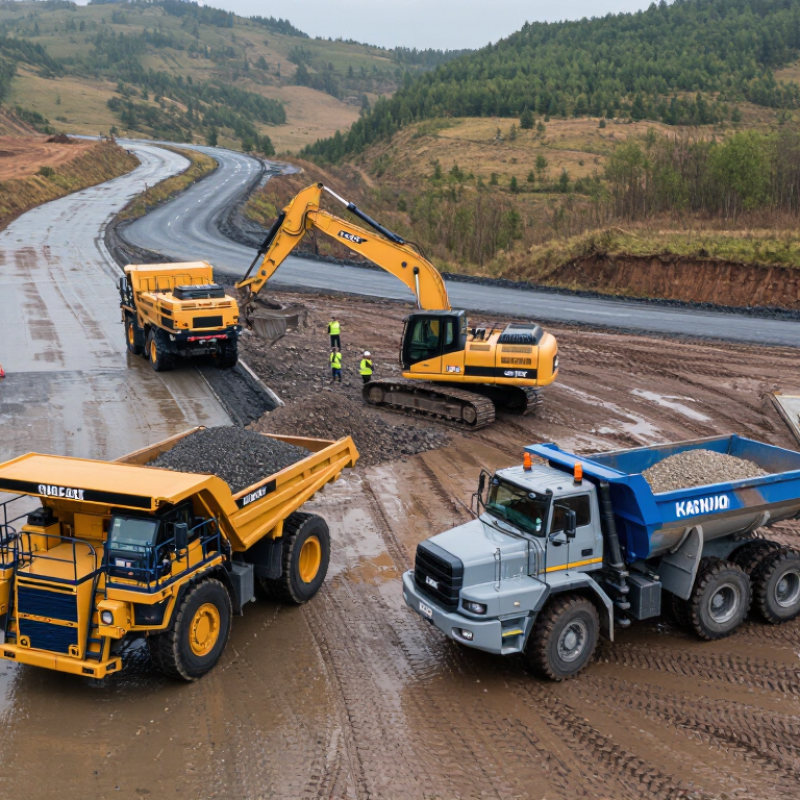
Choosing an Off Road Dump Truck is a production decision, not simply a search for the largest payload. The right machine must suit the material, haul distance, road condition, gradients, and loading equipment. Caterpillar’s Performance Handbook explains how factors such as rolling resistance, grade, and cycle time affect machine performance and production estimates. These details matter on site: a loaded truck climbing a wet ramp faces different demands from one moving over a firm, level haul road.

Published specifications show how widely truck classes can differ. Caterpillar lists the 797F’s rated payload at 363 metric tonnes, while Komatsu’s 930E-5 specifications list a payload of about 290 tonnes. These are manufacturer figures, not promises of daily output. Actual performance depends on operating conditions, maintenance, tires, and loading practices. That distinction is easy to overlook.

Before comparing models, define the job. Record the maximum haul gradient, typical load, road width, turning space, and expected shift hours. Then assess payload against the excavator or loader, braking and retarding capacity, service access, fuel use, and operator visibility. Small details count. A truck that barely clears a turn or spends hours waiting for parts can undermine an attractive purchase price. No single specification settles the choice. Even a careful spreadsheet can miss changing weather or uneven roads, so verify assumptions with site data and qualified equipment specialists before deciding.
How to Choose the Best Off Road Dump Truck
Table of Contents [Hide]
1 Define the Haul Profile: Terrain, Distance, Grades, and Material Density
2 Choose the Truck Class: 41-t Articulated or 363-t Rigid Haulers
3 Match Payload to Production: The Cat 797F Carries Up to 363 Metric Tonnes
4 Check Power and Braking: The Cat 797F Is Rated at 4,000 hp
5 Compare Tire Support, Service Access, and Cost per Tonne

Define the Haul Profile: Terrain, Distance, Grades, and Material Density

Start with the actual haul route, not the mine map’s neat average. Walk or drive both loaded and empty paths after rain, if possible. Note soft shoulders, loose rock, sharp turns, and places where trucks must pass. A short route across sticky clay can be harder than a longer, firm track. Small details matter.

Measure one-way distance and estimate cycle time, including loading, dumping, and waiting. Long hauls increase the value of payload and fuel efficiency, while repeated short runs demand turning room and durable tires. Record the steepest sustained grade, not just a brief ramp. On climbs, loaded weight and traction shape speed; on descents, braking capacity and retarder performance need careful review. Actual conditions vary.

Then identify what the body will carry. Wet soil, blasted rock, and aggregate can have very different densities, so volume alone may mislead. Compare expected material density with body capacity and rated payload; avoid treating the maximum rating as a routine target. If density changes by season, use a realistic range. Verify assumptions with scale tickets and observed cycles, though early estimates are often imperfect. Keep a route log of load, grade, surface condition, travel time, and wheel slip.

How to Choose the Best Off-Road Dump Truck

Define the haul profile: Consider terrain, one-way distance, maximum grade, and material density. Example planning route: rough, unpaved terrain; 5 km one way; 8% maximum grade. These conditions affect traction, braking, cycle time, and truck configuration.

Approximate bulk densities vary with moisture, grading, and compaction. Use them to estimate payload volume: for example, a 40-tonne payload requires less body volume for dense rock than for coal. Confirm actual site material and operating conditions before selecting a truck.

Choose the Truck Class: 41-t Articulated or 363-t Rigid Haulers

How to Choose the Best Off Road Dump Truck

A 41-t articulated hauler suits smaller, winding routes and uneven ground. Its jointed frame helps it turn around tight bends and follow rough tracks. That flexibility can reduce road-building needs, though it does not remove them. Check the route after rain; soft shoulders can still trap a loaded machine. Payload is only useful when the truck can complete the cycle safely and consistently.

A 363-t rigid hauler is built for very high-volume operations with wide, engineered haul roads. Its capacity can move more material per trip, but needs must match the loading equipment, dump area, and road design. Turning space, braking performance, and sustained gradients deserve close review. Space matters. If trucks queue at the loading face, their impressive payload may not improve daily output. The larger class can also demand more extensive site support, so estimate the whole operating system, not just tonnes per trip.

Tips: Map the narrowest turns, steepest grades, and weakest road sections before choosing. Compare realistic cycle times with loaded trucks, not empty runs. Ask operators to assess visibility and turning points on the actual route. Measure twice. Even a careful estimate can miss a seasonal change in ground conditions.

How to Choose the Best Off Road Dump Truck - Choose the Truck Class: 41-t Articulated or 363-t Rigid Haulers
Selection Dimension 41-t Articulated Hauler 363-t Rigid Hauler
Rated payload class Approximately 41 metric tonnes per load. Approximately 363 metric tonnes per load.
Typical operating environment Quarries, construction sites, earthmoving projects, and mines with variable or uneven haul routes. Large open-pit mines with high-volume production and engineered haul roads.
Terrain and traction The articulated frame and all-wheel drive help the truck follow uneven ground and maintain traction on soft or irregular surfaces. Designed for heavy loads on firm, maintained haul roads; less suited to frequent operation on soft, highly irregular ground.
Turning and maneuvering More maneuverable in confined work areas, tighter loading zones, and changing site layouts. Requires wide roads, large turning areas, and substantial clearance around loading and dumping points.
Road and site requirements Can work on developing roads and variable site conditions, although road preparation still improves safety and productivity. Needs carefully designed, graded, and maintained haul roads capable of supporting very high axle loads.
Truck size Typically around 10–11 m long and roughly 3.5–4 m wide; exact dimensions depend on configuration. Typically around 14–16 m long, roughly 9–10 m wide, and about 7–8 m high; exact dimensions vary by design.
Loading and dispatch Can be matched with appropriately sized excavators or wheel loaders. Smaller loads can offer flexibility across multiple work areas. Requires large loading equipment and coordinated dispatch to keep its high payload capacity productive.
Production pattern Well suited to shorter or changing haul routes and projects where flexibility matters more than maximum load per trip. Can move very large volumes per trip, making it a strong fit for long-running, high-volume operations with consistent routes.
Infrastructure and support Requires suitable fueling, maintenance, and service access, but can generally operate with less site infrastructure than an ultra-class rigid fleet. Requires substantial maintenance facilities, heavy lifting capability, specialist service support, and careful route planning.
Best fit when Routes are rough or changing, work areas are relatively confined, or the operation needs versatile trucks across several tasks. Haul roads are engineered, material volumes are consistently high, and the mine can support ultra-class equipment.
Important: Figures are approximate class-level guides, not specifications for a particular truck. Dimensions, payload, operating costs, and productivity vary by configuration, material, route, climate, and site conditions. Compare total cost per tonne and verify the truck’s specifications against the planned haul road and loading equipment.

Match Payload to Production: The Cat 797F Carries Up to 363 Metric Tonnes

Choosing an off-road dump truck starts with the material and the pace of the mine, not the largest number on a specification sheet. A truck rated to carry up to 363 metric tonnes can move substantial volume per cycle. But that capacity only helps when the loading tool, haul road, and dump area can support it. Wet, dense rock can reach the target payload faster than loose material. A calibrated onboard scale helps operators avoid both underloading and repeated overloads.

Match the truck to production. Estimate the tonnes needed per hour, then compare that target with realistic cycle times: loading, travel, dumping, and return. A large truck waiting for a shovel or queuing at a narrow dump point is expensive standing still. So is a smaller fleet making too many trips. Measure the route after rain, too. Ruts and steep grades change travel time.

Look closely at the working details. Can the road width safely accommodate the truck? Are tire availability, service access, and fuel supply dependable on site? These questions are less exciting than payload figures. They matter. And a spreadsheet can still miss a bad turn or a slow shift change. Use observed site data, then revisit the match when material or routes change.

Check Power and Braking: The Cat 797F Is Rated at 4,000 hp

A 4,000-hp rating sounds impressive, but engine power alone does not tell you how a haul truck will perform on your site. It must move a specific payload across real grades, road surfaces, and haul distances. A steep ramp with a full bed demands sustained power; soft ground can waste it. Check the operating weight, payload range, and power-to-weight ratio alongside the headline figure. Numbers need context.

Braking deserves equal attention. Ask for details on service brakes, retarding capacity, and heat management during long descents. A loaded truck coming down a rough ramp generates considerable heat, so brake performance depends on more than a brochure figure. Tire condition and road maintenance matter, too. Walk the route, note its steepest grade, and compare those conditions with the truck’s operating data. That takes time. It is easy to overvalue horsepower and overlook stopping distances. I would also ask how brake inspections are scheduled, since a powerful truck is no advantage when its braking system cannot handle the site’s duty cycle.

Compare Tire Support, Service Access, and Cost per Tonne

How to Choose the Best Off Road Dump Truck

Compare Tire Support, Service Access, and Cost per Tonne

Tire support affects uptime, not just replacement costs. Check whether local suppliers stock suitable tires and can provide field inspections, repairs, and pressure checks. Ask how tire capacity is assessed at your expected load and speed. A truck working long, hot routes may face different tire demands from one on short, rough runs. The Global Mining Guidelines Group’s 2017 time-classification framework separates operating time, delays, and maintenance. Use those categories when reviewing site records; otherwise, downtime can disappear inside a single “available” figure.

Service access matters when a repair starts in the mud, not in a brochure. Inspect access to filters, drain points, and routine service locations. Ask how long common checks take, and whether technicians can reach the truck at the worksite. Then calculate cost per tonne using actual fuel, tires, labor, repairs, and tonnes moved. Compare trucks over the same route and shift conditions. A neat spreadsheet can still flatter a truck if its payload or downtime assumptions are optimistic.

Tips: Track tire removals, service hours, and tonnes hauled for each route. Small differences matter. Recheck the figures after wet-season operations; the first estimate may not hold.

Article Source:

  • Electric Off Road Car
  • Mixer Truck Concrete
  • Trailers
  • Parts
  • About
  • Contact
  • Find a Dealer
1-800-LOADRTE
©2017 - 2025 Load Rite Trailers, Inc
  • Terms & Conditions
  • Privacy
  • Site Map