0
  • WHY CHOOSE LOADRITE?
  • Register a Trailer
  • Dealer Portal
  • Contact
  • Trailers
  • Parts
    • Axle Assemblies & Parts
    • Lights & Electrical
    • Hull Support Systems
    • Spare Tire Carriers
    • Braking
    • Springs, Supports & Bushings
    • Couplers & Tongue Jacks
    • Trailer Accessories
    • Fender Components
    • Wheel Assemblies & Components
    • Frame Components
    • Winch Stand Parts
    • Hardware
  • Trailers 101
  • Resources
    • FAQs
    • Trailer Parts Store
    • Service Videos
    • Documents
    • Warranty Information
  • About
    • Why Choose Load Rite?
    • News
    • Become a Dealer
  • Blog

Boat Trailers

  • Boat Trailers
  • Bunk Models
  • Roller Models
  • Skiff/Jon Boat Trailers
  • Catamaran Trailers
  • Canoe/Kayak Trailers
  • Ski Boat & Inboard Trailers

Personal Watercraft
(PWC)

  • Personal Watercraft Trailers

Pontoon Trailers and Tritoon Trailers

  • Pontoon Trailers
  • Tritoon Trailers

Specialty & Custom

  • Utility Trailers
  • Custom Trailers
  • Sailboat Trailers
  • Australian Certified Trailers
  • Shipping & Storage Cradles
 |
How to Choose the Top Boat Trailer Springs?

How to Choose the Top Boat Trailer Springs?

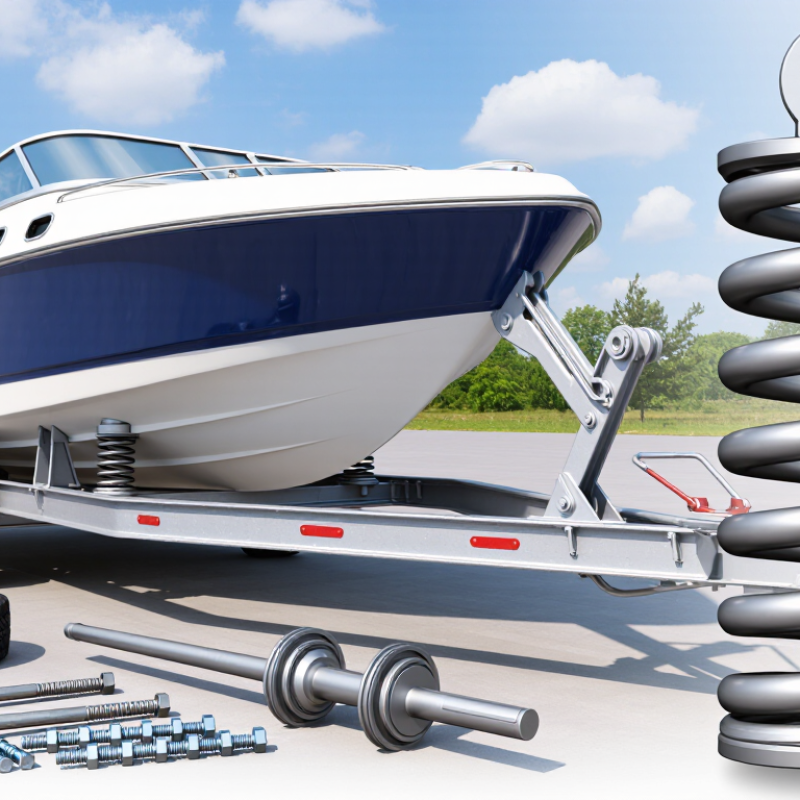
Choosing the right boat trailer springs is more than matching a few numbers. These parts support the boat, absorb road shock, and help the trailer track safely behind your vehicle. A poor match can create harsh bouncing, uneven tire wear, or premature frame stress.

Boat-care author Don Casey offers a useful principle: “A trailer is part of the boat’s safety system.” That idea should guide every spring decision. The correct choice depends on the trailer’s loaded weight, axle rating, spring length, eye design, and mounting position. Measure carefully. Do not rely only on an old catalog listing.

Start with the boat’s real travel weight. Include fuel, batteries, water, fishing equipment, spare tires, and personal gear. A trailer carrying a 3,500-pound load does not need springs rated for only 2,000 pounds. It also should not use springs that are excessively stiff. Overly rigid boat trailer springs can reduce comfort and transfer sharp impacts into the hull and frame.

Condition matters, too. Look for cracked leaves, flattened arches, heavy rust, loose bushings, and uneven gaps. Small defects become serious on long ramps or rough highways. Replace springs in pairs on the same axle.

There is room for judgment. Manufacturer data may be incomplete, and measurements can differ after years of wear. I have seen owners trust appearance instead of dimensions. That mistake is understandable, but avoidable. This guide explains how to compare capacity, construction, corrosion resistance, and fit before buying boat trailer springs. Your goal is simple: stable support, predictable handling, and fewer unpleasant surprises beside the water.
How to Choose the Top Boat Trailer Springs?
Table of Contents [Hide]
1 Understanding Boat Trailer Spring Types and Their Applications
2 Assessing Trailer Weight, Load Capacity, and Spring Dimensions
3 Matching Spring Materials to Freshwater and Saltwater Conditions
4 Checking Compatibility with the Trailer’s Axle and Suspension System
5 Comparing Durability, Maintenance Needs, and Replacement Costs

Understanding Boat Trailer Spring Types and Their Applications

Choosing top boat trailer springs starts with matching the spring type to the trailer’s real working conditions. According to the NMMA 2023 Recreational Boating Statistical Abstract, the United States had about 11.6 million registered recreational boats. That scale reflects varied trailer demands, from light freshwater boats to heavy offshore rigs.

Double-eye leaf springs suit many conventional trailers. Their fixed eyes provide stable alignment and predictable movement. Slipper springs work well on heavier trailers, especially when one end needs to slide during compression. Torsion axles use rubber elements instead of separate leaf packs. They offer a lower profile and less maintenance, but replacement can be less straightforward.

Measure carefully. Record the loaded trailer weight, axle count, spring length, width, and eye diameter. Do not size springs from the boat’s dry weight alone. Fuel, batteries, gear, water, and spare tires can add surprising mass. SAE J684 provides established guidance for trailer coupling and running-gear safety, but it does not replace a proper load calculation.

Corrosion changes the decision. Saltwater can attack spring surfaces, bushings, and mounting hardware after only a few trips. The U.S. Coast Guard’s 2023 Recreational Boating Statistics report documented thousands of boating accidents, reinforcing the value of routine equipment checks. Inspect cracked leaves, flattened arches, loose bolts, and uneven tire wear. A perfect spring choice is not always possible. Recheck the measurements. Oversized springs may create a harsh ride and transfer shock into the hull.

Assessing Trailer Weight, Load Capacity, and Spring Dimensions

How to Choose the Top Boat Trailer Springs?

Choosing boat trailer springs starts with the trailer’s real operating weight. Weigh the boat, fuel, battery, safety gear, and spare wheel together. Do not guess. A dry boat weight can be misleading. I once underestimated stored equipment by nearly 100 kilograms, which changed the spring selection.

Compare the measured load with the axle and spring ratings. Each spring’s capacity must suit its position and share of the axle load. Leave a sensible working margin, but avoid excessive capacity. Overly stiff springs can create a harsh ride and transfer shocks to the hull and frame. Check the trailer’s identification plate and service records when available. A qualified trailer technician can verify uncertain figures.

Spring dimensions must match the original suspension closely. Measure the eye-to-eye length, spring width, thickness, number of leaves, and center-bolt position. Check the installed arch, too. A spring that is only slightly longer can alter axle alignment and tire clearance. Inspect the spring seats, shackles, and mounting bolts before ordering replacements. Rust around the eyes or cracked leaves signals a wider problem. Measure twice. I would also photograph each part before removal, because memory is unreliable. Saltwater exposure makes this inspection especially important. Slight surface corrosion may be manageable, but deep pitting deserves professional assessment.

How to Choose the Top Boat Trailer Springs? - Assessing Trailer Weight, Load Capacity, and Spring Dimensions

Typical Trailer Setup Loaded Trailer Weight Recommended Axle Rating Springs Required Minimum Capacity per Spring Typical Spring Dimensions Selection Notes
Light single-axle fishing boat trailer 900–1,300 lb
(408–590 kg)
2,000 lb
(907 kg)
2 1,000 lb
(454 kg)
Double-eye, 1.75 in wide
20–25 in eye-to-eye
4 leaves, 0.25 in thick
Suitable when the measured loaded weight remains comfortably below the axle rating. Allow additional capacity for fuel, batteries, equipment, and water.
Medium single-axle runabout trailer 1,500–2,200 lb
(680–998 kg)
3,500 lb
(1,588 kg)
2 1,750 lb
(794 kg)
Double-eye, 1.75 in wide
25–26 in eye-to-eye
4–5 leaves, 0.25–0.375 in thick
A common choice for heavier aluminum or small fiberglass boats. Verify the spring center-to-center length before ordering.
Heavy single-axle bass or ski-boat trailer 2,400–3,200 lb
(1,089–1,451 kg)
5,200 lb
(2,359 kg)
2 2,600 lb
(1,179 kg)
Double-eye, 1.75–2.00 in wide
25–30 in eye-to-eye
5–6 leaves, 0.3125–0.375 in thick
Use only if the axle, wheels, hubs, hangers, and frame are also rated for the intended load. Excessively stiff springs can reduce ride quality.
Medium tandem-axle boat trailer 3,500–5,000 lb
(1,588–2,268 kg)
2 × 3,500 lb axles
7,000 lb total
4 1,750 lb
(794 kg)
Double-eye, 1.75 in wide
25–26 in eye-to-eye
4–5 leaves, 0.25–0.375 in thick
Each axle carries part of the load through the equalizers. Replace springs in matched sets on the same axle to maintain balanced ride height.
Large tandem-axle offshore trailer 5,500–7,000 lb
(2,495–3,175 kg)
2 × 5,200 lb axles
10,400 lb total
4 2,600 lb
(1,179 kg)
Double-eye or slipper type
2.00 in wide
25–30 in eye-to-eye
5–6 leaves, 0.3125–0.375 in thick
Confirm the correct spring type, hanger spacing, equalizer geometry, and axle position. High-capacity springs must match the trailer suspension components.
Utility or personal-watercraft trailer 600–1,000 lb
(272–454 kg)
1,500 lb
(680 kg)
2 750 lb
(340 kg)
Double-eye, 1.50–1.75 in wide
20–25 in eye-to-eye
3–4 leaves, 0.1875–0.25 in thick
Check whether the trailer uses leaf springs or torsion suspension. Compact springs may have different eye diameters and mounting dimensions.
Measurement and sizing guidance: Measure the trailer’s actual loaded weight, including the boat, motor, fuel, batteries, water, and gear. Select an axle rating above the loaded weight while staying within the trailer manufacturer’s specifications. Measure a removed spring from the center of one eye to the center of the other eye, then record the spring width, thickness, number of leaves, eye-bolt diameter, and spring type. The capacities and dimensions shown are representative selection ranges; the exact replacement spring must match the trailer’s existing suspension geometry.

Matching Spring Materials to Freshwater and Saltwater Conditions

How to Choose the Top Boat Trailer Springs?

Matching Spring Materials to Freshwater and Saltwater Conditions

Freshwater trailers usually work well with galvanized steel springs. The zinc coating slows rust around ramps, axles, and wet storage areas. However, scratches expose steel quickly, especially where sand rubs against the spring leaves. I have seen a lightly damaged coating become a serious weakness after one season. Check the spring after every few launches. Material choice must also match the trailer’s load rating, eye design, and dimensions.

Saltwater demands stricter corrosion control. Stainless steel springs resist salty moisture better, but stainless does not mean corrosion-proof. Salt can remain inside clamps, bushings, and overlapping leaves. Properly coated marine-grade steel can also perform well when the coating remains intact. Rinse the trailer with fresh water after each ocean trip. Dry it completely when possible. A simple rule helps: more salt exposure requires more inspection.

Tips: Look for pitting, flaking, cracked leaves, and flattened arches. Measure the old spring before ordering a replacement. Never choose by appearance alone. A heavier spring may reduce ride comfort and transfer more shock to the boat. I once assumed a thicker spring was automatically safer; it was not. Consult the trailer’s load data and a qualified technician when measurements seem uncertain. Regular lubrication can protect hardware, but it cannot repair weakened spring steel.

Checking Compatibility with the Trailer’s Axle and Suspension System

Choosing top boat trailer springs starts with compatibility, not price. Measure the existing spring carefully before ordering replacements. Record its length, width, thickness, eye-to-eye distance, and mounting style. A spring can look correct but still fit poorly.

Check the axle’s rated capacity and compare it with the spring’s load rating. The combined spring capacity should support the trailer’s actual load, including the boat, fuel, equipment, and spare tire. Confirm whether the suspension uses eye-to-eye or slipper springs. Also inspect the equalizer, shackles, hangers, and U-bolts for wear. Replacing only the spring may leave damaged hardware in place. That mistake is common. The wrong arch can also change ride height, tire clearance, and trailer stability. Recheck every measurement; one rushed measurement can mislead the entire purchase.

Tips: Photograph the suspension before removal. Measure both sides, even if one spring appears undamaged. Check for rust near the spring eyes and cracks around the axle seats. Never rely only on an online chart. The axle label, trailer documentation, and a physical inspection should agree. If the trailer has uneven tire wear or a tilted frame, investigate the suspension before selecting springs. A higher-rated spring is not automatically better. It may create a harsh ride and transfer extra stress to the frame. When uncertain, ask a qualified trailer technician to verify the measurements and installation details.

Comparing Durability, Maintenance Needs, and Replacement Costs

How to Choose the Top Boat Trailer Springs?

Durability begins with the trailer’s actual load, not its advertised capacity. Measure the boat, fuel, gear, and trailer together. Leave a safety margin. Hot-dip galvanized or properly coated steel usually resists saltwater corrosion better than untreated metal. However, coating damage around the spring eyes can hide serious rust. During inspections, I look for cracked leaves, flattened arches, elongated bolt holes, and uneven tire wear. A spring can appear acceptable while losing its original rate.

Maintenance needs also affect long-term value. Rinse the suspension with fresh water after every saltwater launch. Lubricate approved bushings, but never cover damaged metal with grease and call it protection. The BoatUS Foundation’s trailering guidance recommends regular inspection of suspension hardware, tires, and wheel bearings. Its practical advice is useful, although it does not provide a spring-failure rate. The U.S. Coast Guard recorded 3,844 recreational boating incidents and 658 deaths in its 2023 statistics. Spring failures are not separately tracked, which limits precise risk comparisons.

Replacement costs depend on spring size, corrosion, and labor access. Typical workshop estimates may range from 80 to 250 dollars per spring, with installation adding 100 to 300 dollars. These figures vary widely. The U.S. Bureau of Labor Statistics reported automotive service technicians’ median hourly pay near 23 dollars in May 2023, but marine work may cost more. Replacing only one spring is tempting. It can also create uneven suspension. For matched performance, replacing both sides is often the more defensible choice.

Related Posts

  • How to Choose the Right Trailer Tongue for Optimal Load Distribution and Stability

    How to Choose the Right Trailer Tongue for Optimal Load Distribution and Stability

  • 7 Best Tips for Choosing the Right Boat Trailer Axle

    7 Best Tips for Choosing the Right Boat Trailer Axle

  • 2026 Top Jon Boat Trailer Buying Guide for Global Shoppers?

    2026 Top Jon Boat Trailer Buying Guide for Global Shoppers?

  • Why Are Boat Trailer Parts Essential for Safe Towing?

    Why Are Boat Trailer Parts Essential for Safe Towing?

  • What to Look for in a Boat Trailer Axle?

    What to Look for in a Boat Trailer Axle?

  • The Future of Enclosed Trailers Embracing Innovative Designs and Sustainable Practices

    The Future of Enclosed Trailers Embracing Innovative Designs and Sustainable Practices

Blog Tags:

  • boat trailer leaf springs
  • heavy duty boat trailer springs
  • galvanized boat trailer springs
  • boat trailer replacement springs
  • trailer suspension parts
  • boat trailer suspension kits
  • Trailers
  • Parts
  • About
  • Contact
  • Find a Dealer
1-800-LOADRTE
©2017 - 2025 Load Rite Trailers, Inc
  • Terms & Conditions
  • Privacy
  • Site Map