0
  • WHY CHOOSE LOADRITE?
  • Register a Trailer
  • Dealer Portal
  • Contact
  • Trailers
  • Parts
    • Axle Assemblies & Parts
    • Lights & Electrical
    • Hull Support Systems
    • Spare Tire Carriers
    • Braking
    • Springs, Supports & Bushings
    • Couplers & Tongue Jacks
    • Trailer Accessories
    • Fender Components
    • Wheel Assemblies & Components
    • Frame Components
    • Winch Stand Parts
    • Hardware
  • Trailers 101
  • Resources
    • FAQs
    • Trailer Parts Store
    • Service Videos
    • Documents
    • Warranty Information
  • About
    • Why Choose Load Rite?
    • News
    • Become a Dealer
  • Blog

Boat Trailers

  • Boat Trailers
  • Bunk Models
  • Roller Models
  • Skiff/Jon Boat Trailers
  • Catamaran Trailers
  • Canoe/Kayak Trailers
  • Ski Boat & Inboard Trailers

Personal Watercraft
(PWC)

  • Personal Watercraft Trailers

Pontoon Trailers and Tritoon Trailers

  • Pontoon Trailers
  • Tritoon Trailers

Specialty & Custom

  • Utility Trailers
  • Custom Trailers
  • Sailboat Trailers
  • Australian Certified Trailers
  • Shipping & Storage Cradles
 |
What Is the Best Small Boat Trailer in 2026?

What Is the Best Small Boat Trailer in 2026?

Choosing the best small boat trailer in 2026 is not just a matter of finding one that fits your boat. The right match can make launching smoother, towing steadier, and storage less stressful. The wrong one may bring problems you notice only at the ramp, such as a bow that sits too low or bunks that press against the hull.

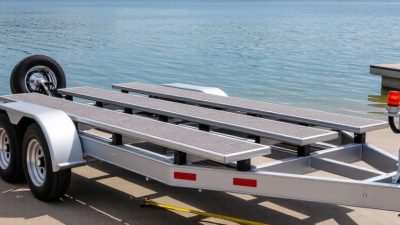
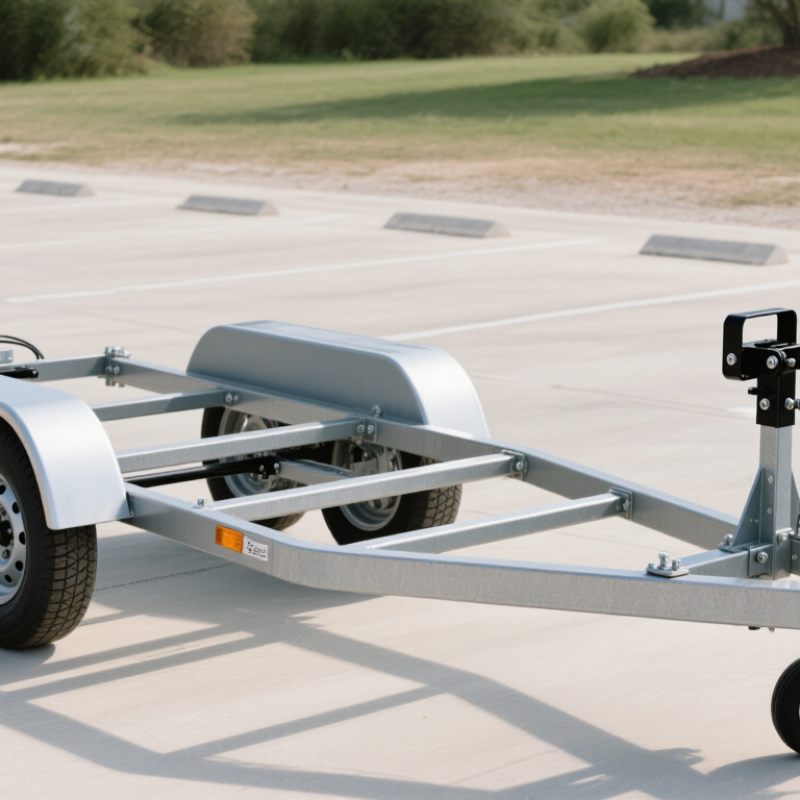
Start with the boat’s loaded weight, including its motor, fuel, battery, and gear. Then check the trailer’s rated capacity, frame length, axle setup, and recommended tongue weight. Details matter. A trailer that looks sturdy in a product photo still needs to suit your boat’s hull and your tow vehicle. Galvanized steel can be practical for frequent exposure to water, while aluminum may appeal to owners seeking a lighter frame. Neither choice removes the need to inspect fasteners, tires, lights, and bearings.

Bunks and rollers also affect how easily the boat loads and unloads. Think about your usual launch: Is the ramp steep, shallow, or crowded? Small differences can matter. Compare warranty terms, replacement-part availability, and support from the manufacturer or dealer, not just the sticker price. Specifications vary by model, so verify details before buying. Local towing and equipment requirements may also differ; confirm the rules where you plan to travel.

There is no single winner for every boat owner. This guide compares useful trailer types and features, while noting where a choice depends on boat size, launch conditions, and maintenance habits. Even a careful comparison has limits. The best small boat trailer is the one that safely fits your actual setup, not simply the one with the longest feature list.
What Is the Best Small Boat Trailer in 2026?
Table of Contents [Hide]
1 Estimate Loaded Boat Weight Using 6.1 lb/gal Fuel and 8.34 lb/gal Water
2 Calculate Trailer Payload as GVWR Minus the Trailer’s Empty Weight
3 Check Axle and Tire Ratings Against GVWR and NHTSA Load Labels
4 Target 10–15% Tongue Weight for a Stable Tow
5 Compare Bunks, Rollers, and SAE J684-Compatible Couplers for Your Boat and Launch Sites

Estimate Loaded Boat Weight Using 6.1 lb/gal Fuel and 8.34 lb/gal Water

What Is the Best Small Boat Trailer in 2026?

Dry weight is only a starting point. Estimate the boat as it will travel, including the outboard, batteries, safety gear, and fluids. The U.S. Energy Information Administration lists gasoline at about 6.1 pounds per U.S. gallon as a conversion factor. Eighteen gallons add roughly 110 pounds. Fuel weight varies slightly with blend and temperature, so treat this as a planning estimate. Water weighs more. The U.S. Geological Survey gives about 8.34 pounds per gallon, making a 12-gallon freshwater tank roughly 100 pounds. Those two tanks alone add around 210 pounds.

Small numbers matter. A cooler, anchor, wet lines, and spare equipment can add more than expected. I would weigh the boat in its normal travel condition when possible; estimates can miss hidden gear. Then compare the loaded boat weight with the trailer’s rated carrying capacity, and check that the combined trailer and cargo remain within its gross vehicle weight rating. Include the trailer’s own weight in that total. Verify axle and tire ratings, too. A trailer that looks substantial may still be undersized. For a close match, use the capacity label and a scale ticket—not the hull’s advertised dry weight alone.

Small Boat Trailer Planning: Added Fuel and Water Weight

Estimate how onboard fuel and water add to a boat’s loaded weight. Fuel is calculated at 6.1 lb per US gallon and water at 8.34 lb per US gallon.

Multiply each fluid’s gallons by its weight per gallon, then add those results to the boat, motor, battery, gear, and trailer loads as applicable. Confirm the fully loaded weight is within the trailer’s rated capacity.

Calculate Trailer Payload as GVWR Minus the Trailer’s Empty Weight

What Is the Best Small Boat Trailer in 2026?

A trailer’s payload is its GVWR minus its empty weight. For example, a trailer rated at 2,000 pounds with an empty weight of 550 pounds has 1,450 pounds of payload. That allowance must cover the boat, motor, fuel, batteries, and gear carried on the trailer. Do the math. But check the trailer’s data plate and documentation, since listed weights can vary with installed options.

The arithmetic is simple; the assumptions are not. An empty trailer may already include a spare tire or winch, while an advertised boat weight may exclude its motor and fluids. Small details matter. Add the real weights of your equipment, then compare the loaded trailer’s total weight with its GVWR. Then weigh it. A suitable scale can reveal surprises that estimates miss, especially after adding anchors, coolers, or wet equipment.

Tongue weight is part of the trailer’s total loaded weight, not extra payload to add a second time. If your calculation leaves almost no margin, reconsider the load; I would not treat a paper calculation as proof that the setup is comfortably within its rating.

Check Axle and Tire Ratings Against GVWR and NHTSA Load Labels

A small boat trailer is only a good fit when its ratings match the boat as you actually use it. Add the boat, outboard, fuel, battery, anchor, and routine gear; the hull’s listed weight is not the whole load. Weigh the loaded trailer if you can. Close estimates can miss wet gear or a heavier motor.

Read the trailer’s federal certification label and tire information. The label lists GVWR, the maximum permitted loaded trailer weight, and GAWR, the limit for each axle. Do not treat the axle rating as extra capacity beyond GVWR. Check that the tires’ combined load capacity and the wheels’ ratings also meet the demands placed on them. The lowest applicable limit matters. Check cold tire pressure against the stated specification, too.

One detail is easy to overlook. Tongue weight shifts some load onto the tow vehicle, but it does not make an overloaded trailer acceptable. Follow the trailer maker’s guidance for tongue weight and load placement, then confirm the loaded setup stays within every rating. Labels can be faded or hard to reach; take a clear photo before buying. I would still verify unclear figures with the manufacturer, rather than guess from a similar trailer.

What Is the Best Small Boat Trailer in 2026? Check Axle and Tire Ratings Against GVWR and NHTSA Load Labels

There is no single best trailer for every boat. Compare the trailer’s labeled GVWR with its axle and tire ratings, then confirm the loaded trailer’s actual weight and load distribution. The generic configurations below are arithmetic examples, not product listings or recommendations for a specific boat.

Generic small-boat trailer rating comparison (example values in pounds)
Example configuration Labeled GVWR Example empty weight Calculated payload
(GVWR − empty weight)
Axle rating Combined tire capacity Rating check against GVWR Example loaded gross weight
Single axle; two tires rated 1,100 lb each 2,000 450 1,550 1 × 2,000 lb GAWR 2 × 1,100 = 2,200 Passes the basic rating screen. GVWR is the limiting rating. 1,800
Single axle; two tires rated 1,750 lb each 2,990 600 2,390 1 × 3,500 lb GAWR 2 × 1,750 = 3,500 Passes the basic rating screen. GVWR is lower than the axle and combined tire ratings. 2,700
Single axle; two tires rated 1,500 lb each 3,500 650 2,850 1 × 3,500 lb GAWR 2 × 1,500 = 3,000 Does not pass the conservative screen: combined tire capacity is 500 lb below GVWR. Verify the specified tires and actual wheel loads. 3,200
Tandem axle; four tires rated 1,200 lb each 4,400 950 3,450 2 × 2,200 lb GAWR 4 × 1,200 = 4,800 Passes the basic rating screen. Check each axle and tire individually, not just the totals. 4,100
Tandem axle; four tires rated 1,820 lb each 5,000 1,100 3,900 2 × 3,500 lb GAWR 4 × 1,820 = 7,280 Passes the basic rating screen. The labeled GVWR remains the maximum permitted loaded trailer weight. 4,800

How to use the figures: GVWR is the maximum permitted weight of the fully loaded trailer. Payload is calculated as GVWR minus the trailer’s actual empty weight; include the boat, engine, fuel, batteries, and gear when estimating the loaded weight.

Axle and tire check: GAWR is the rated capacity of an axle. Tire capacity depends on the tire’s load rating and specified cold inflation pressure. A combined rating comparison is only a screening check: tongue weight and uneven load distribution affect the loads carried by individual axles and tires.

Check the labels: Read the trailer’s certification label for its GVWR and axle GAWR, and check the applicable tire and loading information for tire size, load rating, and inflation pressure. Confirm the exact trailer’s labels and components; do not rely on an example configuration or a listing description.

Before towing: Weigh the loaded trailer and, where possible, check axle and tongue loads with suitable scales. Keep every measured load within the applicable labeled and component ratings, and verify the tow vehicle and hitch ratings as well.

Target 10–15% Tongue Weight for a Stable Tow

What Is the Best Small Boat Trailer in 2026?
Target 10–15% Tongue Weight for a Stable Tow

A well-matched small boat trailer should carry the boat securely and track calmly behind the tow vehicle. Tongue weight is a key part of that balance. The National Highway Traffic Safety Administration’s trailer-towing guidance recommends a tongue load of about 10–15% of the loaded trailer’s weight. For a 2,000-pound boat-and-trailer package, that means roughly 200–300 pounds pressing down at the hitch. Too little can encourage sway; too much can overload the vehicle’s hitch or rear axle. Small shifts matter. Fuel, anchors, batteries, and wet gear all change the actual load, so a catalog estimate is only a starting point.

Tips: Weigh the loaded trailer on level ground, using a suitable tongue-weight scale or public scale. Keep the trailer level while measuring. Move heavy gear forward or aft in small steps, then measure again. Check it twice. Confirm that the hitch, vehicle, and trailer ratings all allow the measured load.

A trailer that looks steady in a driveway may behave differently on a windy road or during a quick lane change. That is why choosing the “best” trailer means more than comparing frame materials or advertised capacity. Use the boat’s real loaded weight, follow the manufacturer’s limits, and recheck after changing equipment. The 10–15% range is useful, but it is not a promise of stability in every setup. A careful measurement can still miss a shifting load.

Compare Bunks, Rollers, and SAE J684-Compatible Couplers for Your Boat and Launch Sites

For a small boat trailer in 2026, match the support system to your hull and launch sites. Bunks spread the boat’s weight along padded rails and suit many fiberglass hulls. They are simple to inspect, but may need deeper water for loading. Rollers can help on shallow ramps and make retrieval easier, though poorly adjusted rollers may concentrate pressure on the hull. Neither setup is best everywhere.

Couplers matter just as much. SAE J684 sets performance requirements for trailer couplings, hitches, and safety chains. Choose a coupler whose rated capacity meets or exceeds the fully loaded trailer weight, and confirm the hitch ball size matches. The U.S. Coast Guard’s 2023 Recreational Boating Statistics recorded 4,040 reportable boating accidents nationwide; the report does not isolate trailer-launch incidents. Still, careful checks before towing are worthwhile. Small details matter.

Tips: At the ramp, look for a steep or shallow slope, loose gravel, and changing water levels. These details can decide whether bunks or rollers feel practical. Check the coupler latch, safety chains, and lights before each trip. Then inspect bunk padding or roller alignment periodically. A little awkwardness remains: the easiest trailer to launch may not be the gentlest choice for every hull.

Related Posts

  • China Top Boat Trailer Manufacturers for Global Buyers?

    China Top Boat Trailer Manufacturers for Global Buyers?

  • Essential Tips for Choosing the Perfect Boat Trailer: A Comprehensive Guide for New Owners

    Essential Tips for Choosing the Perfect Boat Trailer: A Comprehensive Guide for New Owners

  • China Top Boat Trailer Manufacturers How to Choose?

    China Top Boat Trailer Manufacturers How to Choose?

  • Choosing the Right Boat Trailer for Your Needs Expert Tips and Recommendations

    Choosing the Right Boat Trailer for Your Needs Expert Tips and Recommendations

  • Top 10 Jon Boat Trailer Types Buyers Should Know?

    Top 10 Jon Boat Trailer Types Buyers Should Know?

  • How to Choose a Jon Boat Trailer in 2026?

    How to Choose a Jon Boat Trailer in 2026?

Blog Tags:

  • boat trailer manufacturers
  • boat trailer suppliers
  • boat trailer wholesale
  • boat trailer factory
  • custom boat trailers
  • boat trailers for sale
  • Trailers
  • Parts
  • About
  • Contact
  • Find a Dealer
1-800-LOADRTE
©2017 - 2025 Load Rite Trailers, Inc
  • Terms & Conditions
  • Privacy
  • Site Map