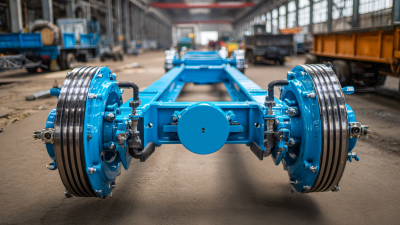
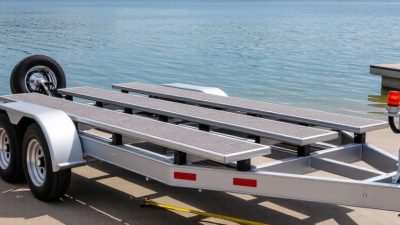
Choosing the best trailer axles in 2026 starts with the trailer’s actual job, not a brand name or low price. A utility trailer carrying garden equipment has different demands from a boat trailer exposed to water and frequent launching. The right axle must match the trailer’s loaded weight, suspension layout, wheel pattern, and expected road conditions. A mismatch can cause uneven tire wear, poor handling, or premature component failure.
Before comparing products, confirm the axle’s capacity and key measurements. Check hub-face distance, spring-center distance, brake configuration, and compatibility with your existing hubs and wheels. These details are easy to overlook. They matter. Consider whether a straight or drop axle suits your trailer’s design, and ask how the manufacturer supports replacement parts and installation questions. For a frequently used trailer, reliable brakes and accessible service information may be worth more than a small upfront saving.
This guide looks at trailer axles by practical buying factors, including construction, capacity, fit, and intended use. It also explains where a budget option may be adequate and where paying for better materials or features could make sense. Specifications and product availability can change, so verify current details with the manufacturer or a qualified trailer technician before ordering. A product page can look convincing; I would still measure twice. The best choice is not always the most expensive, and there is no universal winner. The goal is a properly matched axle that carries its rated load and suits the way you actually tow.
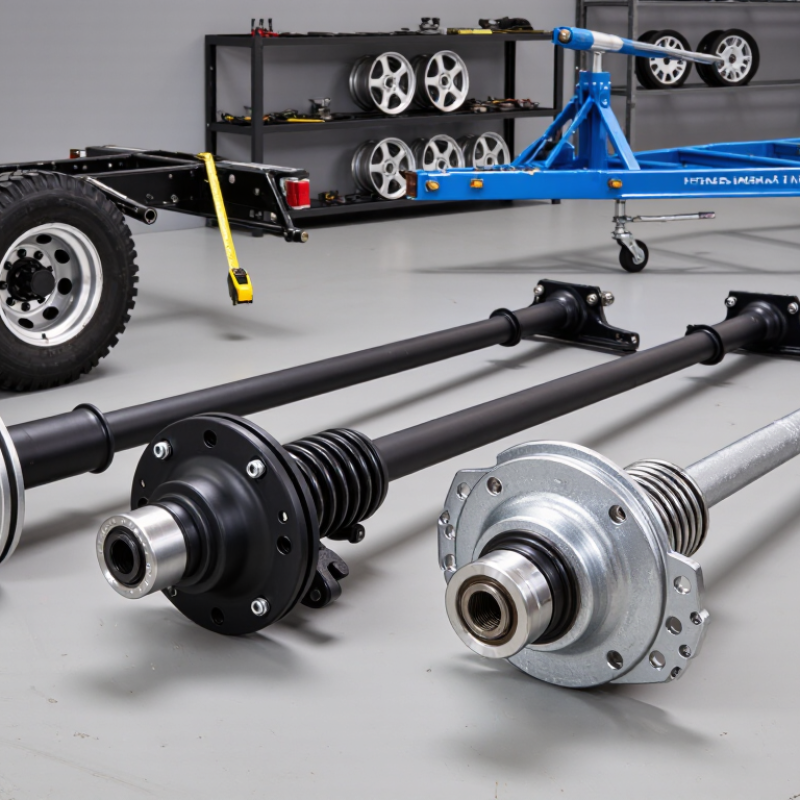
Trailer axle choice depends on load, road conditions, and how the trailer is used. A straight beam axle with leaf springs is a common, straightforward setup. The springs support the trailer and can be inspected for cracks, sagging, or loose hardware. This arrangement suits utility and cargo trailers that regularly carry moderate loads. Simple, but not trivial. A worn spring can affect tire wear and handling.
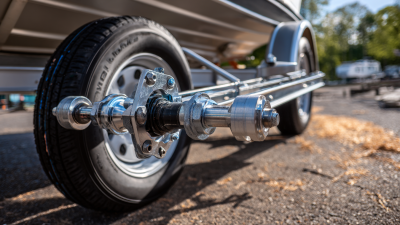
Torsion axles use rubber elements inside the axle tube to absorb road shock. Each wheel can move more independently, and the compact design leaves the underside relatively clear. They are often used on smaller enclosed trailers, boat trailers, and light-duty campers. Ride quality depends on the load and axle rating; an underloaded torsion axle may feel firm. Replacement can also be less convenient if its internal components wear out.
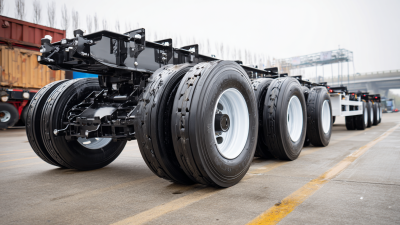
Single-axle trailers are easier to maneuver and maintain, but offer less carrying capacity than many tandem setups. Tandem axles can spread a load across more tires and may feel steadier on longer trips. They also add weight, cost, and more components to inspect. Two axles do not automatically make a trailer safer. Match axle capacity to the trailer’s rated gross weight, then check tire ratings, brake equipment, hub pattern, and spring or torsion configuration. Recheck the actual load distribution, too; it is easy to assume cargo sits evenly when it does not. I would not choose by price alone.
Choosing a trailer axle in 2026 starts with the trailer’s actual loaded weight, not its empty weight. Add the trailer, cargo, accessories, and any water or fuel carried on board. Measure it loaded. A scale gives better evidence than a catalog estimate. Then check how much weight rests on the hitch; the axles do not carry the entire trailer’s weight. For a tandem setup, load may not split evenly, especially on uneven ground or with cargo placed too far back.
Select an axle rating that fits the expected load while staying within the trailer’s gross vehicle weight rating. Do not treat a higher axle rating as permission to exceed the frame, tires, wheels, hubs, or suspension limits. Not just the axle. Confirm that every connected component supports the intended capacity. Leave a sensible margin for ordinary load variation, but avoid guessing at a large upgrade. That can change ride height and handling. If the loaded weight or weight distribution is uncertain, have the trailer weighed and ask a qualified technician to check the axle and suspension specifications. It is easy to miss a toolbox or spare tire. Recheck the setup when the trailer’s use changes.
Match axle capacity to trailer weight and payload
The estimates divide the combined rating of two equally loaded axles by 0.90, assuming 10% of the loaded trailer weight is carried at the hitch. This is a screening comparison, not a trailer rating: the manufacturer’s GVWR and the limits of the tires, wheels, frame, coupler, and tow vehicle still apply. Include cargo in the loaded trailer weight, and verify actual load distribution before choosing an axle.
Choosing a trailer axle in 2026 starts with its job, not its advertised capacity. Leaf-spring axles remain a practical choice for utility and work trailers. Their parts are familiar, and worn springs or bushings can usually be inspected and replaced separately. You may feel more road vibration, though, especially on an empty trailer. Torsion axles use rubber cords inside the axle tube to absorb bumps. They often ride quietly and need fewer routine suspension adjustments. But when the rubber elements wear, repair options can be limited; sometimes the complete axle assembly needs replacement. Fit matters.
Independent suspension gives each wheel more freedom to respond to uneven ground. That can help keep tires planted on rough tracks, but it adds components and setup complexity. For a lightly used cargo trailer, that extra hardware may not earn its keep. Check the trailer’s gross axle rating, hub-face measurement, spring-center spacing, brake configuration, and tire capacity before comparing designs. These details must match the frame and intended load. A higher rating alone does not make an axle a safe upgrade. Measure twice; frame alignment is easy to overlook. If the trailer regularly carries changing loads, have a qualified trailer technician verify the selected rating and mounting geometry.
Assessing Brakes, Suspension, and Construction Materials
A dependable axle is a matched system, not just a weight rating. Choose brakes rated for the trailer’s loaded weight, then confirm the controller and wiring suit the brake type. Electric brakes are adjustable and practical for many road trailers; hydraulic systems can offer smooth, strong braking, but add components to inspect. Check drum or rotor surfaces for heat marks, and inspect wiring near the backing plate. Small details matter. For heavier loads, ask a qualified technician to verify braking capacity rather than relying on an axle label alone.
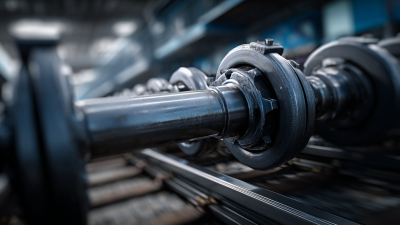
Suspension choice depends on the road and cargo. Leaf springs are straightforward to inspect and repair; torsion systems can reduce vibration, but damage may be harder to spot. For construction, corrosion protection matters as much as tube size. The Aluminum Association’s material data puts aluminum density near 2.7 g/cm³, compared with about 7.8 g/cm³ for carbon steel. That weight difference is useful context, not proof that an aluminum axle is stronger or better. Most buyers should compare steel grade, wall thickness, weld quality, and protective coating. I’d be cautious about choosing by advertised capacity alone; real loads and rough roads expose weak assumptions.
Tips: Check axle alignment and bearing play before buying. Ask for the rated load, brake type, and suspension details in writing. If the seller cannot explain them clearly, keep looking.
Before buying a trailer axle, calculate the trailer’s fully loaded weight, not its empty weight.
Include cargo, water, tools, and other equipment. The axle rating must suit the load carried by that axle, while allowing for how weight is distributed across the trailer. Numbers matter. An axle that looks substantial can still be undersized. Check that its hub-face and spring-center measurements match your trailer; even a small mismatch can complicate installation and affect alignment. Confirm the bolt pattern, wheel capacity, and brake type, too. Do not guess. Compare these details with the trailer’s specifications or have a qualified technician verify them.
Think about where and how the trailer will be used. Frequent wet-road travel or exposure to road salt makes corrosion protection and sealed components more important. Check the suspension style, spindle dimensions, and whether replacement bearings and brake parts are readily available. Ask for documentation showing the axle’s capacity and specifications, rather than relying on appearance alone. A low purchase price can be tempting, but it may not include compatible brakes or hardware. I still find fitment details easy to overlook when comparing options. That is a reason to slow down, measure twice, and confirm the complete assembly before ordering.